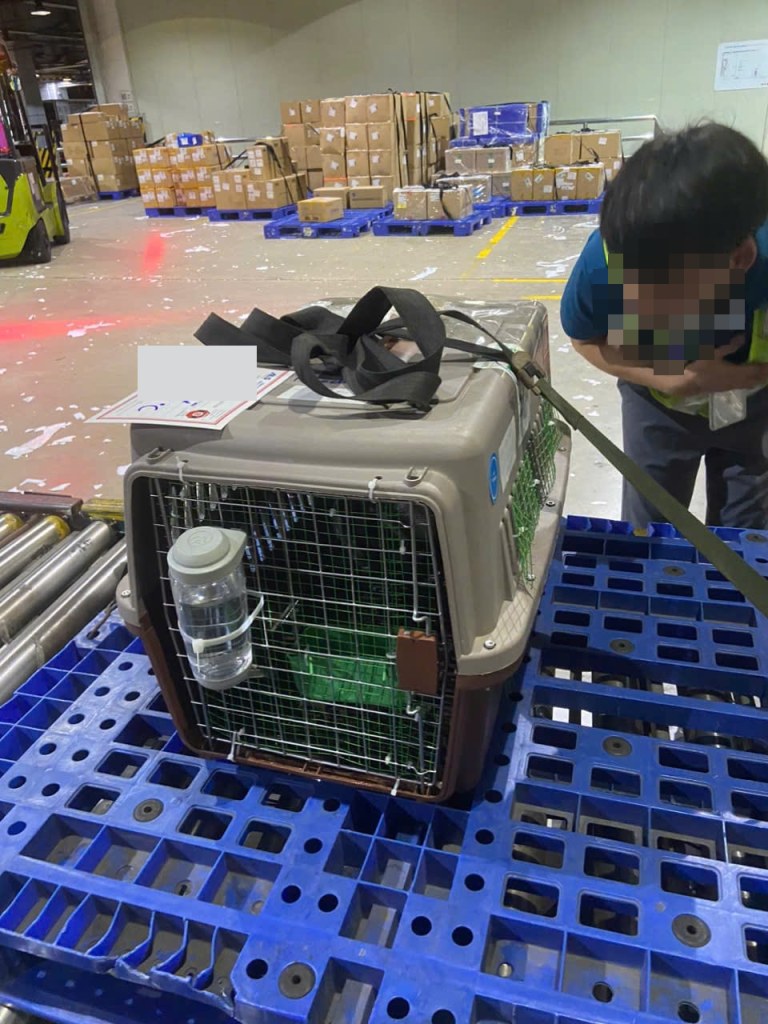
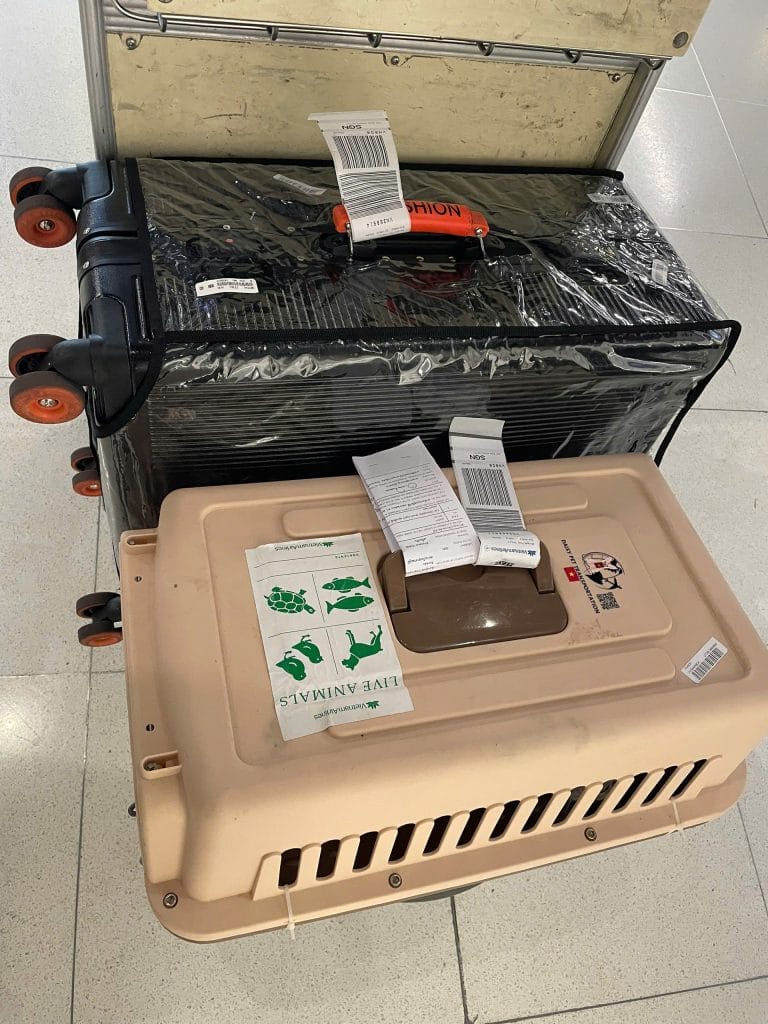
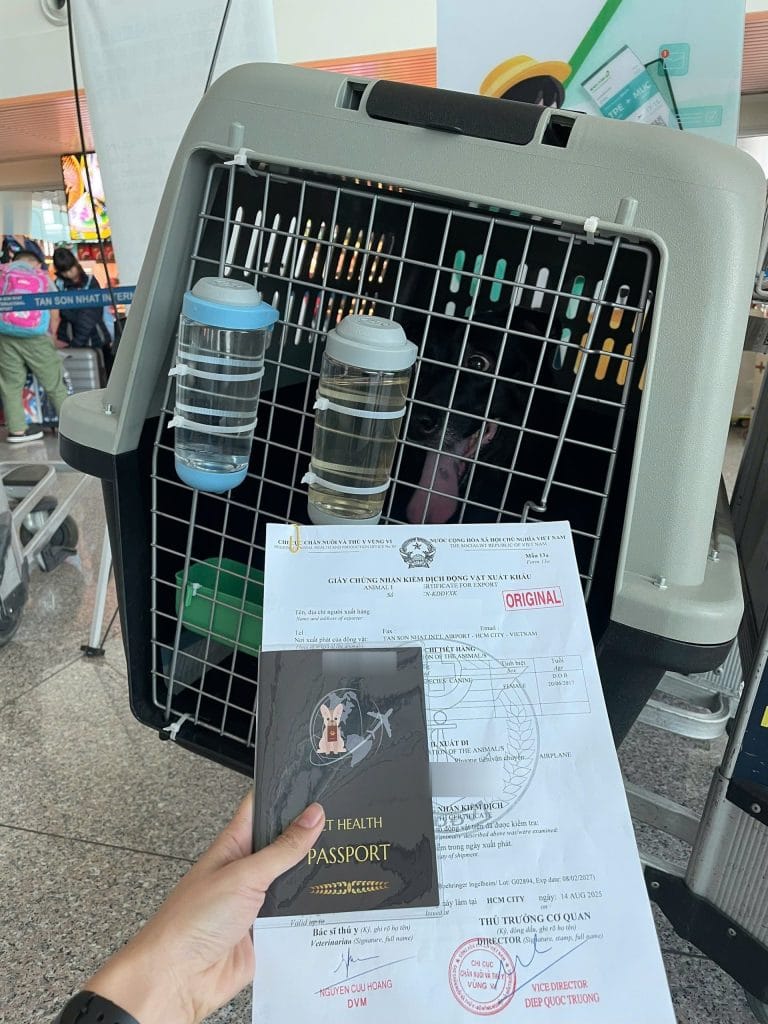
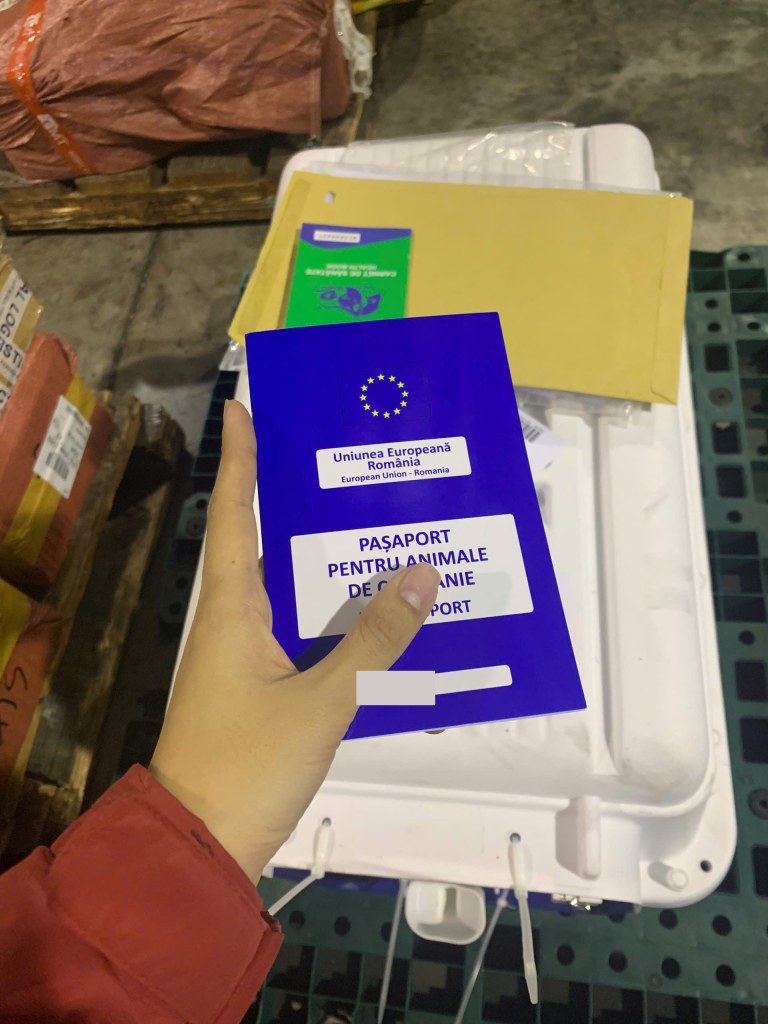
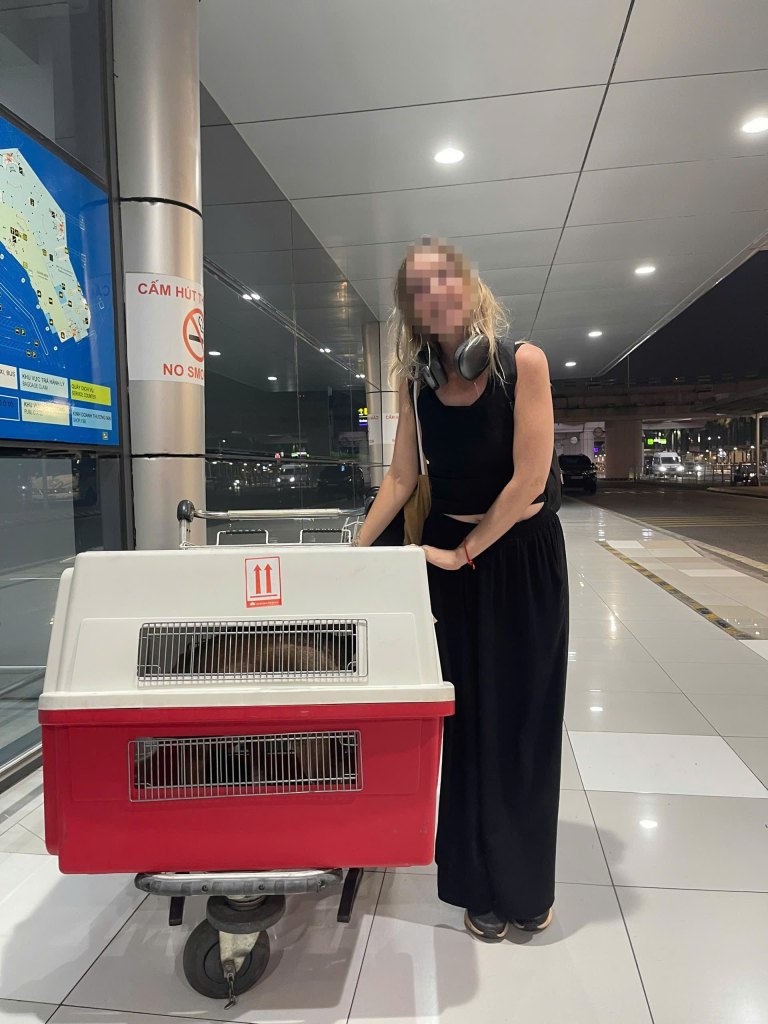
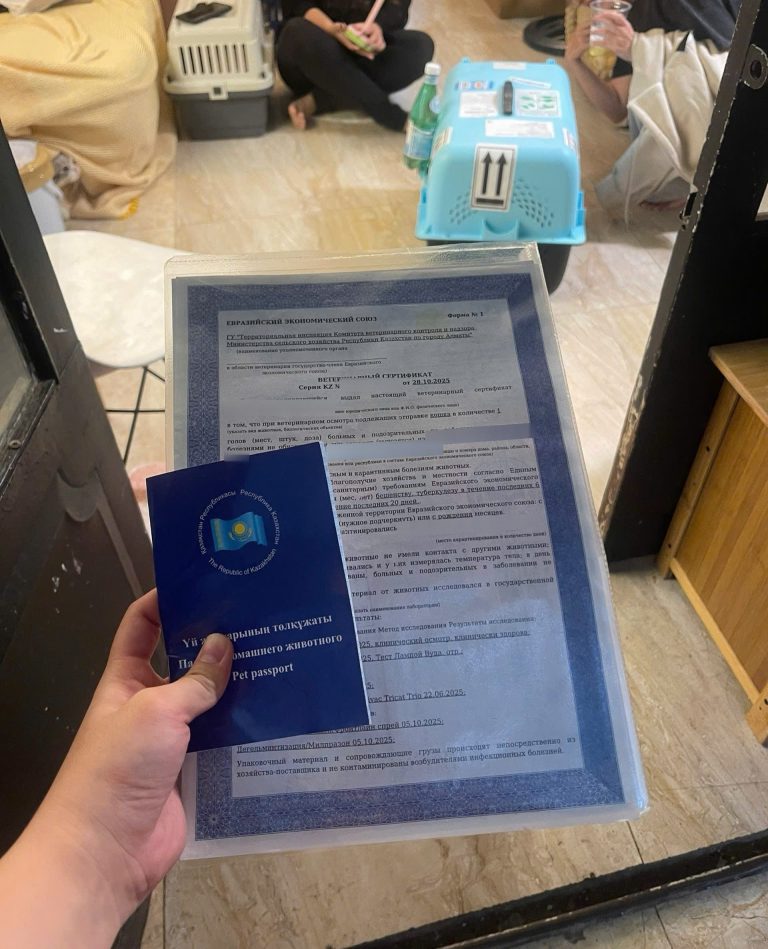
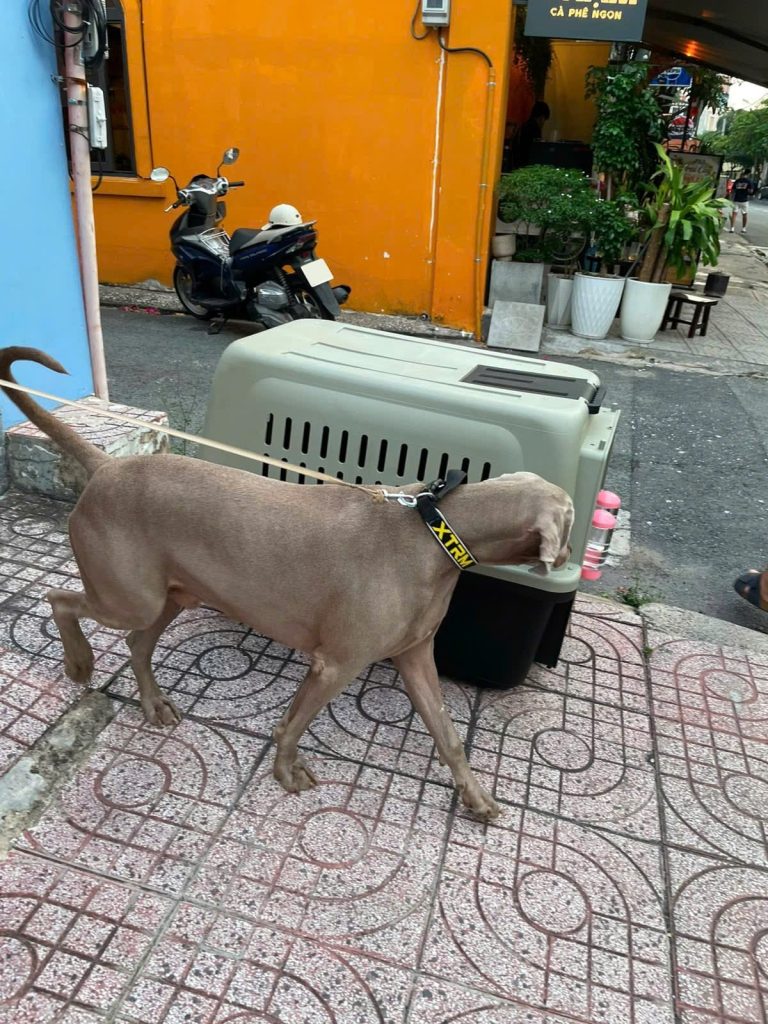
Their owner was born in Saigon and has lived in France since well before it became Ho Chi Minh City. In August 2026, he flew home to France with two orange Pomeranian puppies bought in Hanoi — Fuji and Yuki — on a route that Vietnam-to-Europe pet relocation treats as one of the strictest borders in the world. This case study documents their real file: why the clock on two puppies born two days apart didn’t start until they turned seven months old, why their blood had to fly to Europe before they could fly to Paris, and how a 90-day wait — not the flight itself — set the actual departure date.
Meet Fuji and Yuki
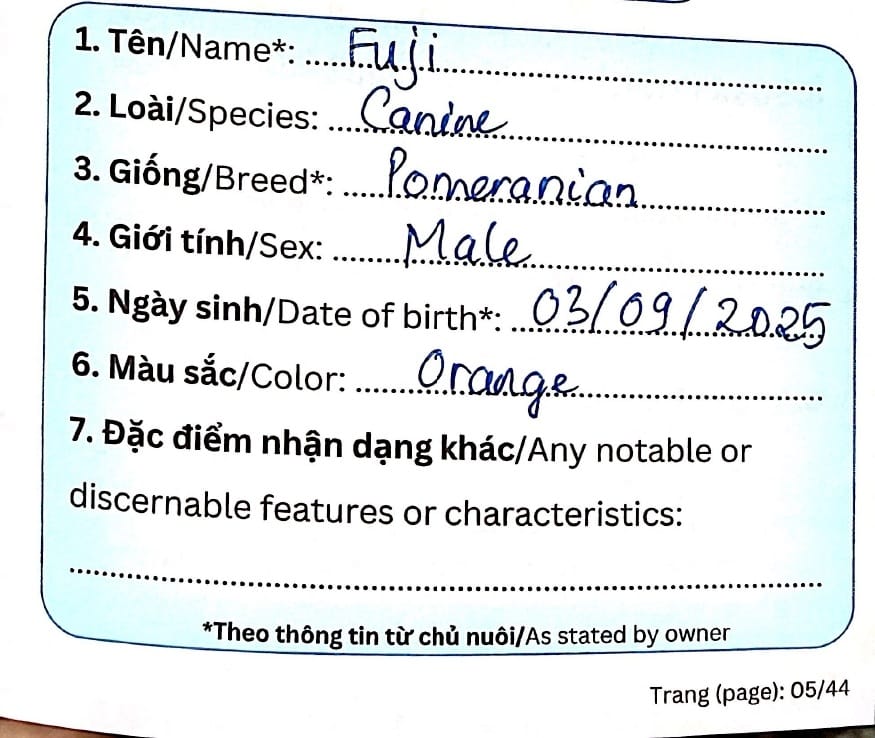
Fuji, male, and Yuki, female, are orange Pomeranians born two days apart — 3 September and 5 September 2025 — and raised at a pet shop and veterinary clinic in Hanoi that also handled their microchips and vaccinations. Their owner travelled to Vietnam with a companion on 28 July 2026 and flew home from Ho Chi Minh City on 23 August, which meant the puppies’ entire compliance file had to be finished, and their mandatory waiting period cleared, before that return date — not built around it.

Vietnam’s “Unlisted” Status Sets the Clock
The European Union sorts every non-member country into a rabies-risk tier, and Vietnam sits in the strictest one: an Unlisted Third Country, with no simplified path for young puppies. That status is what actually decided Fuji and Yuki’s earliest possible vaccination date. EU rules require the primary rabies vaccine to be given at 12 weeks of age or older, so a puppy born in early September couldn’t be vaccinated before early December — but in practice, their appointment didn’t happen until April, giving them months of extra margin before the rest of the file even started.
One Microchip, One Vaccine Appointment, Two Identical Files
Both puppies were microchipped and given their first rabies vaccine on the same day, 3 April 2026. Under EU rules a rabies vaccine only counts as valid 21 days after it’s given, and their vaccination booklets record that exactly: “valid from” dates of 24 April 2026 for both dogs, one calendar cycle after the injection, matching the rule to the day.
The Blood That Had to Fly to Europe First
Vietnam has no EU-approved laboratory for the rabies antibody titer test the EU requires from unlisted countries, so a vet drew blood from both puppies on 3 May 2026 — 30 days after their vaccine, the minimum wait the rule allows — and shipped the samples to a laboratory on the EU’s designated list. Both results came back at ≥8 IU/mL, more than fifteen times the EU’s 0.5 IU/mL minimum, reported on 3 June 2026. A strong result doesn’t buy back any time, though — the clock that actually governs entry starts on the day the blood was drawn, not the day the lab confirms it worked.
The 90-Day Wait That Really Set the Departure Date
From that 3 May blood draw, EU rules require at least 90 days between the blood draw and the issue of the health certificate for a pet from an unlisted country — regardless of how strong the titer result is or how long ago the lab report arrived. That made 1 August 2026 the earliest date Fuji and Yuki’s certificates could be issued. The owner’s own flight home was booked for over three weeks after that, which meant the puppies’ paperwork was never the tight part of this itinerary — the biology was, and it had cleared with room to spare.
| Milestone | Date |
|---|---|
| Rabies vaccine given (both puppies) | 3 April 2026 |
| Vaccine legally valid (21-day rule) | 24 April 2026 |
| Blood drawn for FAVN titer test | 3 May 2026 |
| Earliest health certificate date (90-day rule) | 1 August 2026 |
| Actual departure from Ho Chi Minh City | 23 August 2026 |
Flying Home Together
The owner and his puppies left Ho Chi Minh City on Singapore Airlines flight SQ185 at 7:40 PM on 23 August 2026, connecting through Singapore to SQ336 into Paris Charles de Gaulle the following morning. Because Fuji and Yuki travelled on the same connection as their owner, the trip stayed well inside the EU’s non-commercial 5-day rule — the requirement that a pet arrive within 5 days of its owner’s own flight, or the movement falls under commercial rules, which are considerably more complex. Direct-connection routing through Singapore is one of the more reliable ways to keep that window intact on a Vietnam-to-France itinerary.

Home in France
By the time Fuji and Yuki’s crates were opened in France, their file had crossed the same distance their owner crossed decades earlier — Saigon to France — except this time measured in a 90-day biological clock instead of a lifetime. Two Hanoi-born Pomeranians, seven months old before Vietnam’s own rabies-risk classification would let them leave, landed the same morning as the man who was bringing them home.
Last updated 17 Oct 2026 · First published 1 Sep 2026