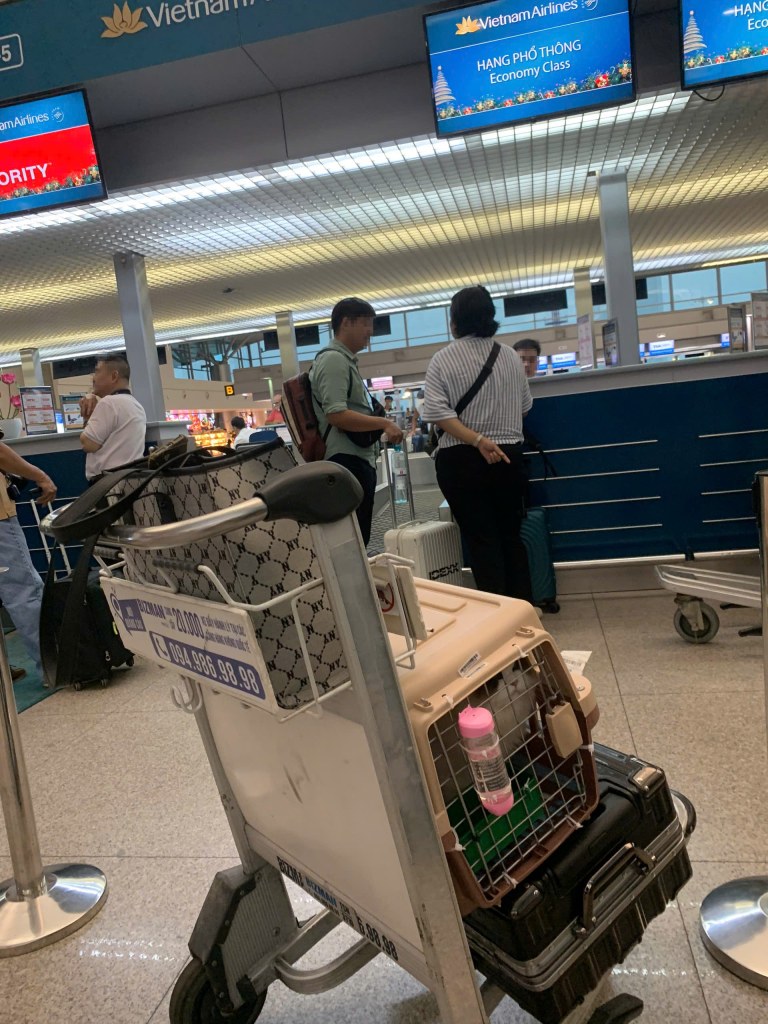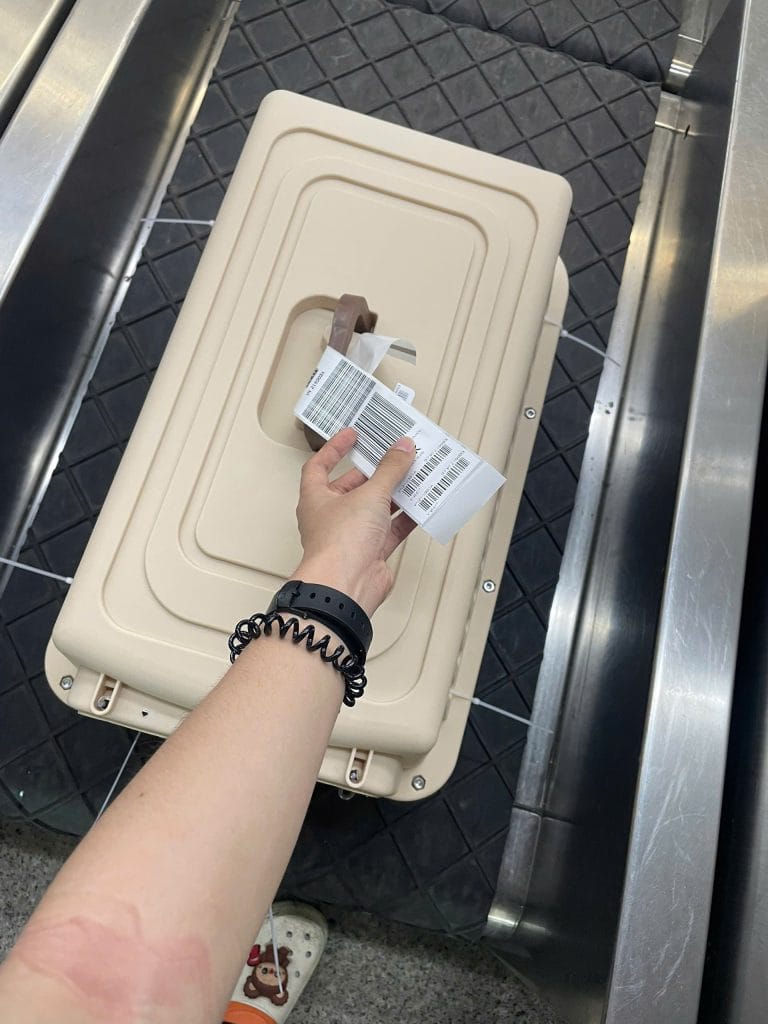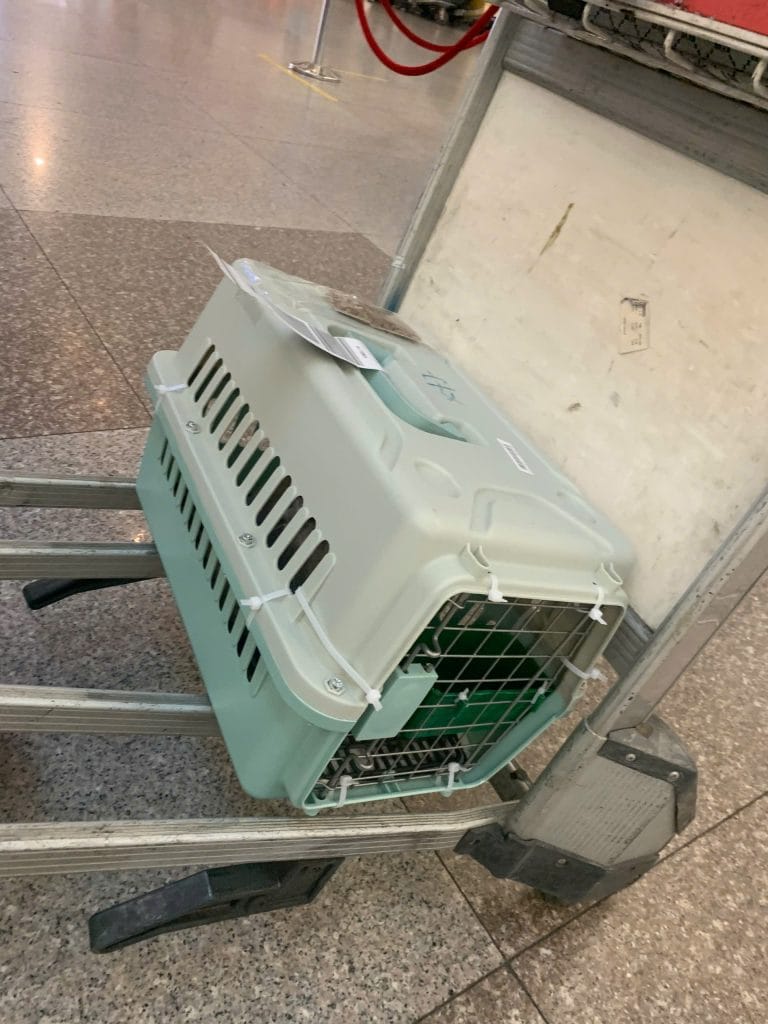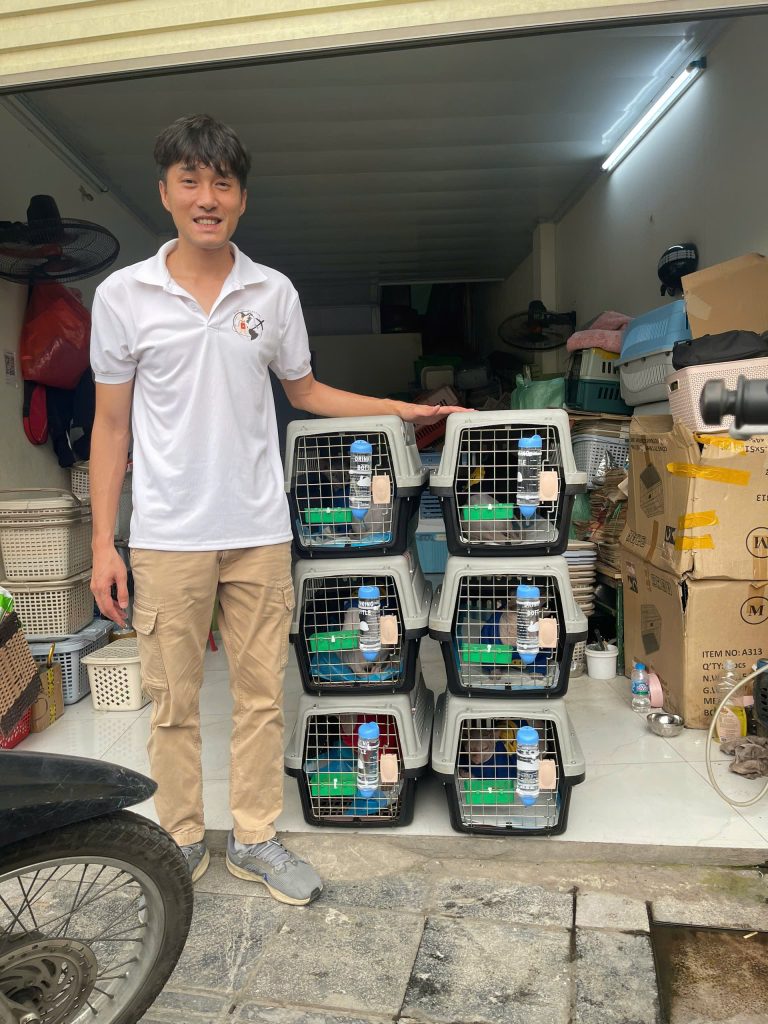
Most owners assume that once a rabies titer test comes back with a passing number, the hard part is over. It isn’t. Taiwan doesn’t just ask whether the result passed – it asks exactly how many days sit between the blood draw and the landing date, and the answer has to fall inside a specific window. For an owner relocating a mother Sphynx cat and her five kittens from Hanoi to Taipei, that number came in 76 days short, discovered only after the application was already filed. Fixing it meant pushing the flight back nearly three months – and along the way, catching a second problem that could have grounded two of the six cats entirely.
Six cats, one blood draw, one lab in Germany
Metis, the mother, was born in July 2021. Her five kittens – Seth, Bastet, Thoth, Nyx, and Zeus – all came from the same litter, born in March 2023. All six are Sphynx, and all six were flying together as one family. On October 10, 2025, all six had blood drawn on the same day at a veterinary clinic in Hanoi and sent for a rabies antibody titer test at a laboratory on the list that Taiwan’s Animal and Plant Health Inspection Agency (APHIA) recognizes for this test. Every cat came back well clear of the bar: Seth’s result read 8 IU/ml or higher, against a passing threshold of just 0.5 IU/ml.
A clean titer result feels like the finish line. For a shipment to Taiwan, it’s closer to the starting gun – because what APHIA does with that result depends entirely on the calendar.
The math nobody ran before filing
Taiwan treats Vietnam as a rabies-affected country, which by default means seven days of mandatory quarantine for any incoming dog or cat. That default can be waived – but only for a cat whose blood was drawn between 180 days and one year before arrival, and only if the application is filed at least 120 days ahead or the lab sends its report directly to APHIA.
Daisy Pet filed the Import Permit application on December 28, 2025, listing a tentative arrival date of January 22, 2026. Counted against the October 10 blood draw, that’s 104 days – a passing titer, but 76 days short of the 180-day floor the waiver requires. APHIA’s reviewer caught it and laid out the choice in plain terms: keep the January date and accept seven days of quarantine at the Guanyin station on arrival, or push the flight to April 8, 2026 or later – the earliest date that clears 180 days – and have the laboratory email the test reports straight to APHIA’s dedicated verification inbox, one cat per email, before the cats could be waived through instead.
Two cats, two paper trails that didn’t match
The same review turned up a second problem, smaller in scope but just as capable of stalling all six cats over two: the mother, Metis, and one of her kittens, Zeus. Metis’s 15-digit microchip number appeared one way on her rabies vaccination record and a different way on her basic profile page, and her birth date on file didn’t match the date printed on her own vaccination certificate and lab report. Zeus had a matching version of the same problem – the birth date on his vaccination certificate didn’t agree with the one on his titer report.
APHIA gave two ways to close a mismatch like this: a video of the actual booklet page, held in close-up for two to three seconds on each of seven details in turn – microchip number, species, sex, birth date, the rabies vaccine sticker, the injection date, and the vet’s signature – or a written correction statement from the veterinarian who drew the blood or gave the shot, naming the correct date and signing next to it. Two cats, two documents each, and every one of them had to trace back to a vet’s signature before APHIA would move the file forward.
A second notice, and a deadline that could have cancelled the file
Weeks after the first notice, the file still wasn’t clear. APHIA’s dedicated inbox hadn’t received the direct email from the laboratory yet, and Zeus’s blood test report still needed its formal correction statement in hand rather than promised. The second notice set a hard line: supplement everything by February 26, 2026, or the application would be cancelled outright, sending the entire filing – all six cats, not just the two with open questions – back to square one with a fresh 20-day-minimum lead time.
Closing both threads before that deadline fell to Daisy Pet: chasing the laboratory for the direct email confirmation, and going back to the clinic in Hanoi for the vet-signed correction statement on Zeus’s file. That’s the part of a Taiwan waiver application that’s easy to underestimate going in – it isn’t one document to chase, it’s a set of independent parties – a laboratory abroad, a clinic in Hanoi, an owner switching a flight date – that all have to land on the same page before a single APHIA deadline. Miss it because one party is slow, and the whole shipment resets, not just the piece that was late.
The permit, the new date, and the waiver
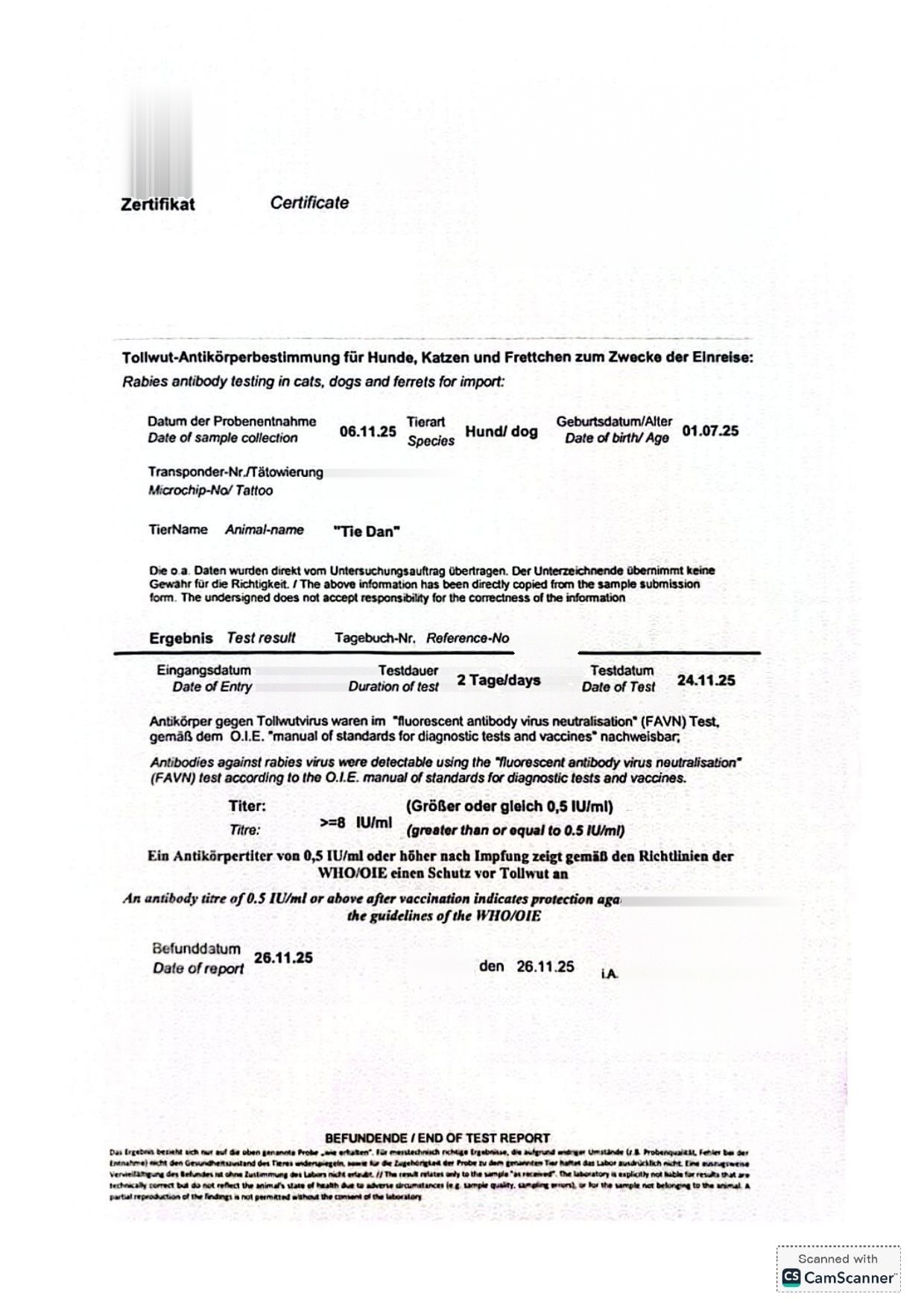
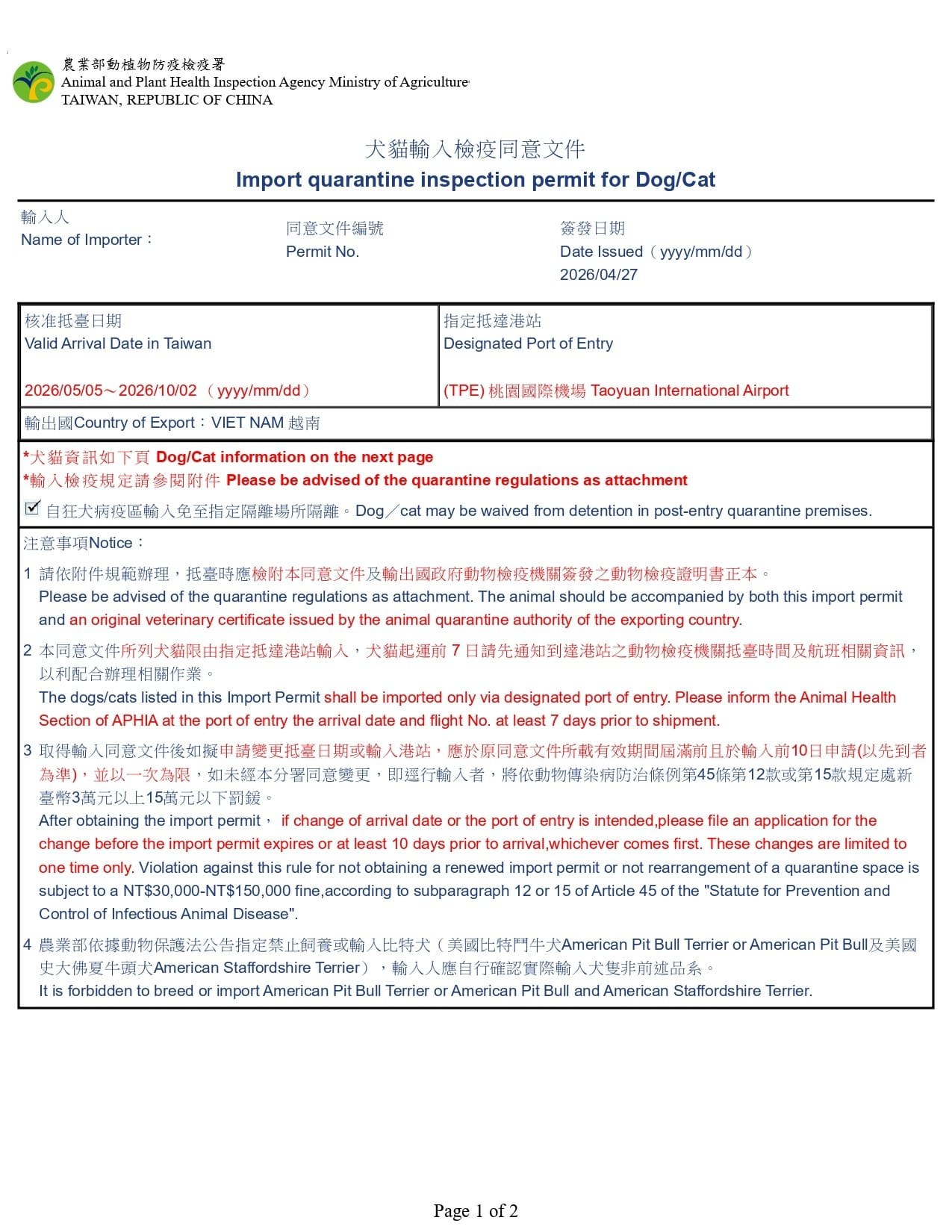
Import Permit HC20251228005152 was issued on March 24, 2026, valid through August 15, 2026, with the corrected arrival date locked to April 27, 2026 – well clear of the 180-day floor from the October blood draw – landing at Taoyuan International Airport (TPE), the port of entry named on the permit. The export health certificate issued by Vietnam’s regional animal health office followed the same corrected microchip and birth date records that had gone through the correction round weeks earlier.
Landing without quarantine
All six cats landed at Taoyuan on April 27, 2026, and cleared as waived from post-entry quarantine – no seven-day stay at the Guanyin quarantine station. The application’s own record now shows the case closed as “Imported.” What started as a 76-day miscalculation and two mismatched vaccination booklets ended with the harder outcome the family had actually wanted from the start.
If you’re planning a similar move
- Count the days between your blood draw and your planned arrival before you file – not after. The 180-day floor is the single most common reason a waiver application gets bounced back to the standard quarantine track.
- Cross-check the microchip number and birth date across every document for every pet – the vaccination certificate, the titer report, and the application form itself. One mismatched digit is enough to flag the file.
- Confirm your lab is one Taiwan actually recognizes for direct submission before you fly the blood sample out, and get the lab to commit to emailing the report to APHIA directly – a promise from the lab is not the same as a completed submission.
- Read every deadline in an APHIA notice as a hard stop. Missing it doesn’t just affect the flagged pet – it can cancel the entire filing.
For the complete filing sequence, from the RNATT test through the quarantine-waiver decision, see our full overview of pet shipping to Taiwan.
Last updated 16 Oct 2026 · First published 25 Aug 2026