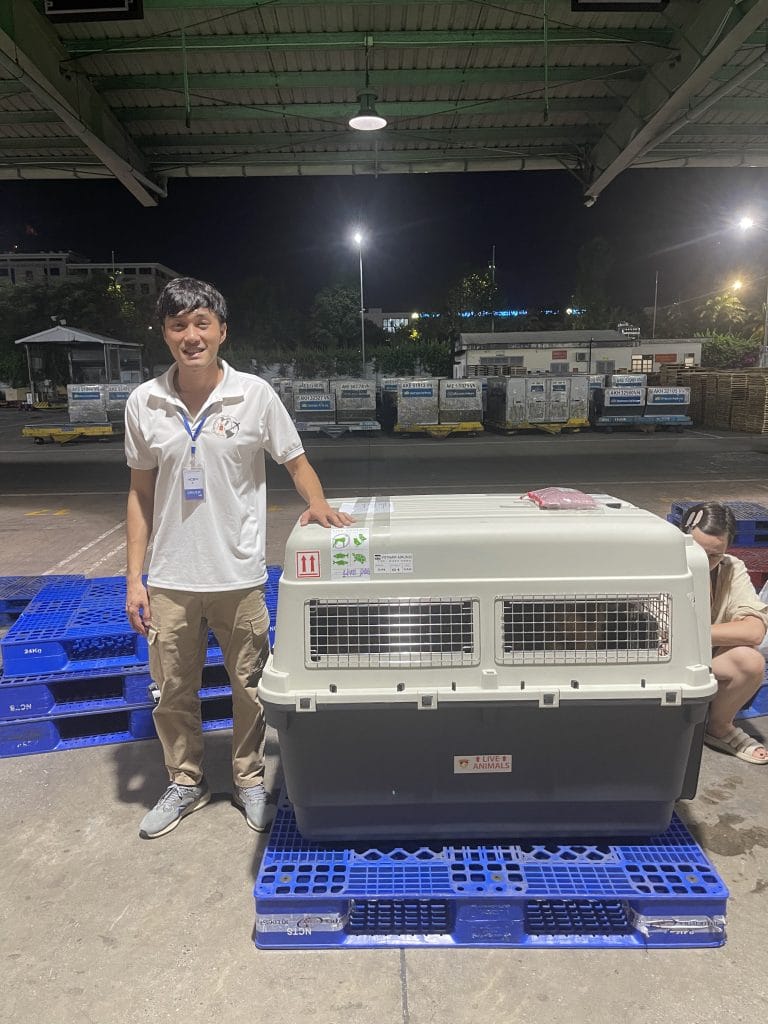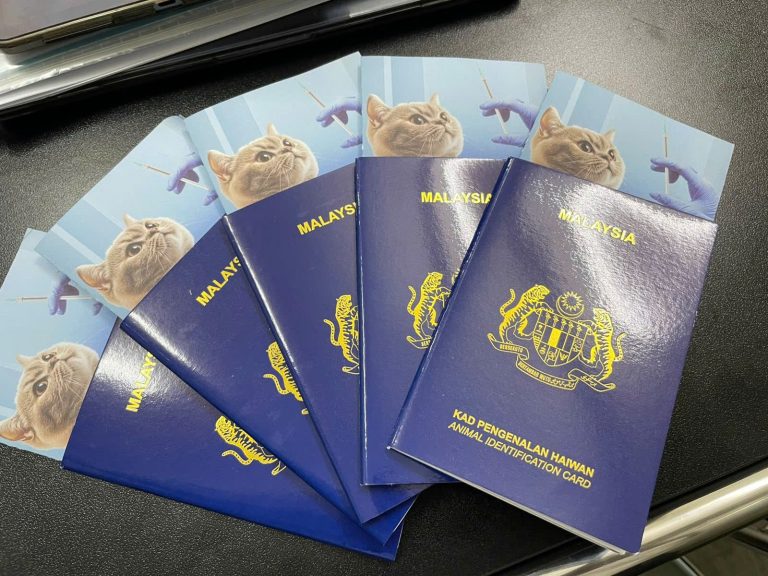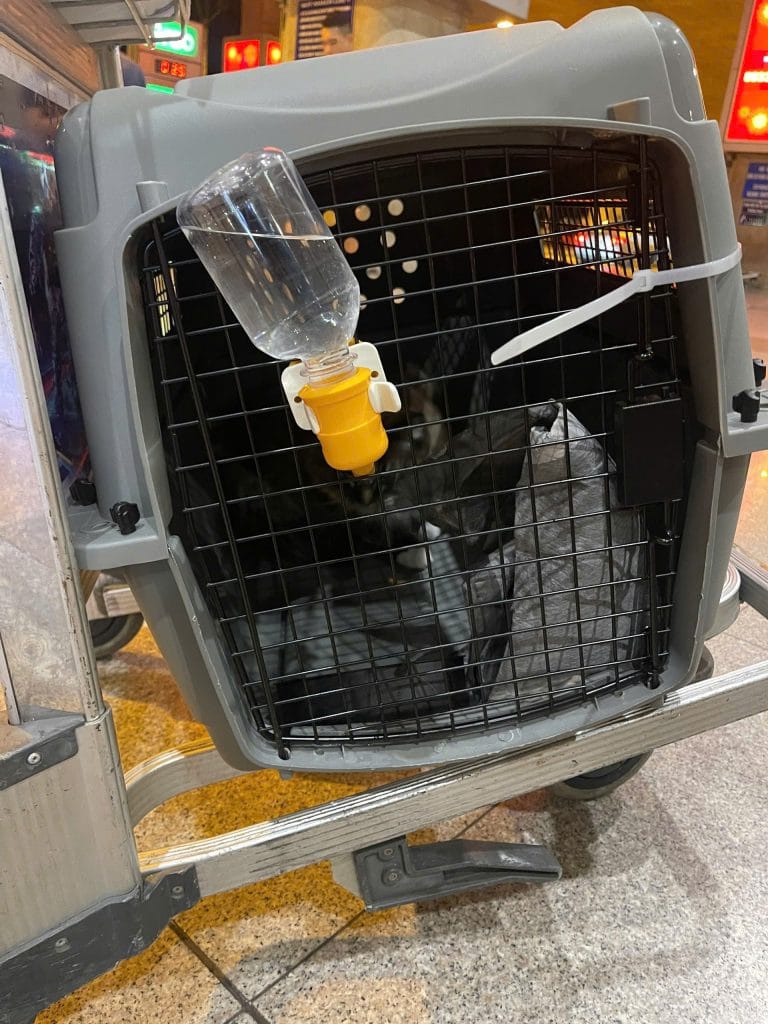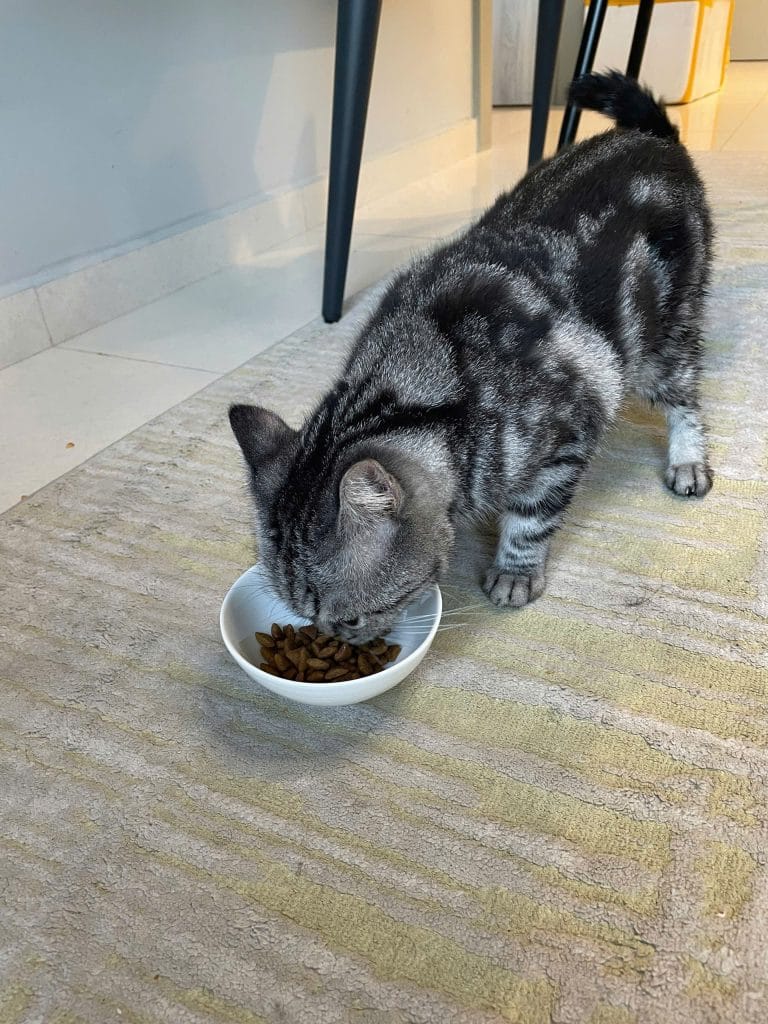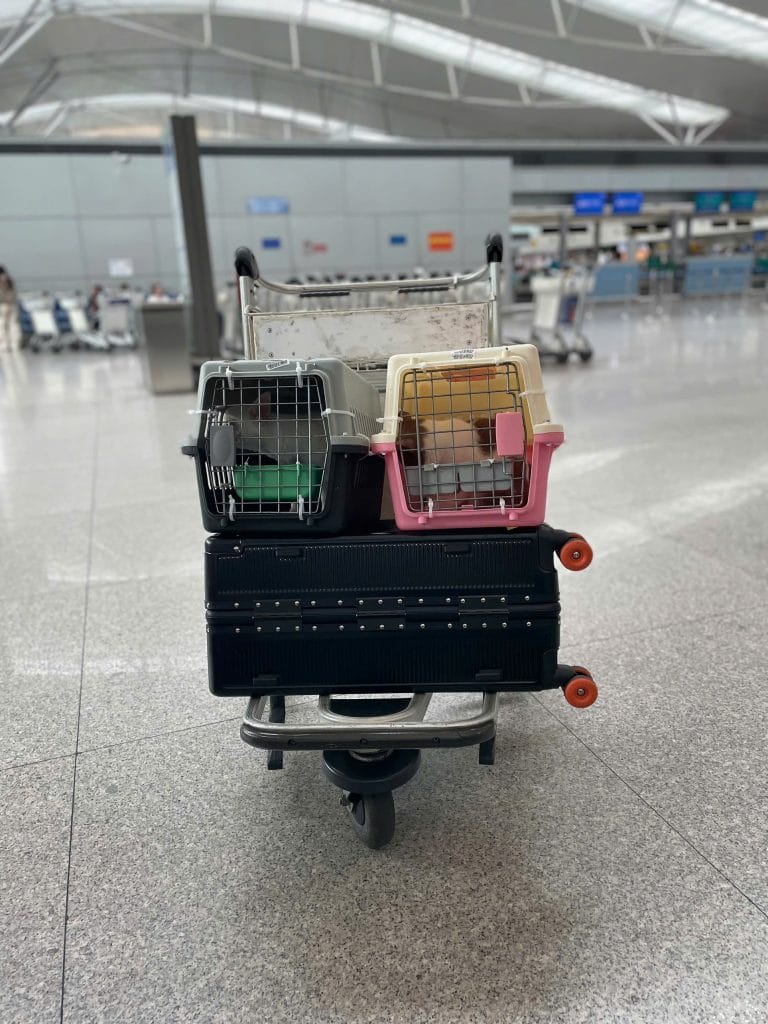
Vietnam’s pet import framework is built around three time-locked compliance windows — and missing any single one triggers a cascading delay at Tan Son Nhat or Noi Bai airport. The 30-day forward calendar below maps every mandatory deadline, from microchip verification to filing the Import Quarantine Declaration Form with the Regional Animal Health Office, so nothing falls through the cracks.
This guide applies to dogs and cats entering Vietnam from any country. For a full breakdown of all entry requirements, costs, and procedures, start with our Vietnam pet import guide. The timeline here is the operational layer on top of that foundation — the exact scheduling logic your veterinarian and relocation team need to execute correctly.
| Category | Key Requirements & Regulatory Notes |
|---|---|
| 1. Export Process (in the departure country) | Depends on the export country: typically an ISO microchip, a rabies vaccination (at least 30 days before the flight, under 12 months old on arrival), a government-endorsed export health certificate, and an export permit where required. |
| 2. Import Process (Vietnam) | File Form 3 (Mẫu 3), the quarantine declaration, with the airport quarantine station (Sub-Dept No. I at HAN, No. VI at SGN); about 48 hours before landing is safest. It is not an import permit. The Import Animal Quarantine Certificate, Form 15a (Mẫu 15a), is issued only after the officer checks the documents, scans the microchip and examines the pet. Shipments of 3+ pets also need Form 19 (Mẫu 19) approved by Cục Chăn nuôi và Thú y first. |
| 3. Flights & Weather | Prioritize direct or short connection flights. Avoid extreme summer heat months due to airline Checked Baggage (AVIH) travel bans caused by runway heat risks. |
| 4. Preparation Timeline | A structured 30-day veterinary schedule executed in chronological order from Day 1 to Day 30. |
1. Veterinary Regulations for Shipping Pets to Vietnam
Vietnam’s import framework for dogs and cats is structured around three non-negotiable compliance windows. Each window has a fixed position in relation to your travel date — they cannot be rearranged, accelerated, or substituted. Understanding them as a system, rather than a checklist, is the difference between a smooth clearance and a four-hour standoff at the quarantine station.
Window 1 — Microchip (Sequence-Locked): Your pet must carry an ISO 11784/11785 15-digit microchip implanted before any rabies vaccination is administered. There is no time window here — the sequence is the constraint. A microchip implanted after the rabies shot means the vaccine record cannot be linked to a verified identity, and Vietnamese quarantine officers will reject the documentation on arrival.
Window 2 — Rabies Vaccination & Minimum Age (30 Days to 12 Months Before Travel): This is the window most owners misread. Vietnam requires the rabies vaccine to have been administered no earlier than 12 months before the travel date, and no later than 30 days before. The 30-day minimum gives the body time to produce a measurable immune response. The 12-month maximum is Vietnam’s unique rule — the country does not accept the 3-year rabies vaccine protocol if the injection was administered more than 12 months before arrival. A valid 3-year US or EU rabies shot that was administered 14 months ago is not sufficient for Vietnam entry. This catches a significant number of owners travelling from the United States and Europe. Minimum entry age: Pets must be at least 12 weeks old when receiving their rabies vaccination, plus a 30-day waiting period, meaning the absolute minimum age for entry into Vietnam is 16 weeks (4 months).
Window 3 — Health Certificate with Government Endorsement (7–10 Days Before Flight): A letter from your private veterinarian alone is not accepted. The health certificate must be signed by a government-accredited or USDA-endorsed veterinarian and endorsed by the relevant government authority (USDA APHIS in the US, CFIA in Canada, or equivalent). This endorsement process typically takes 3–5 business days on top of the clinical examination itself. The total window from exam to endorsed certificate in hand is therefore 7–10 days before departure — the exact window is set by the export country, not by Vietnam.
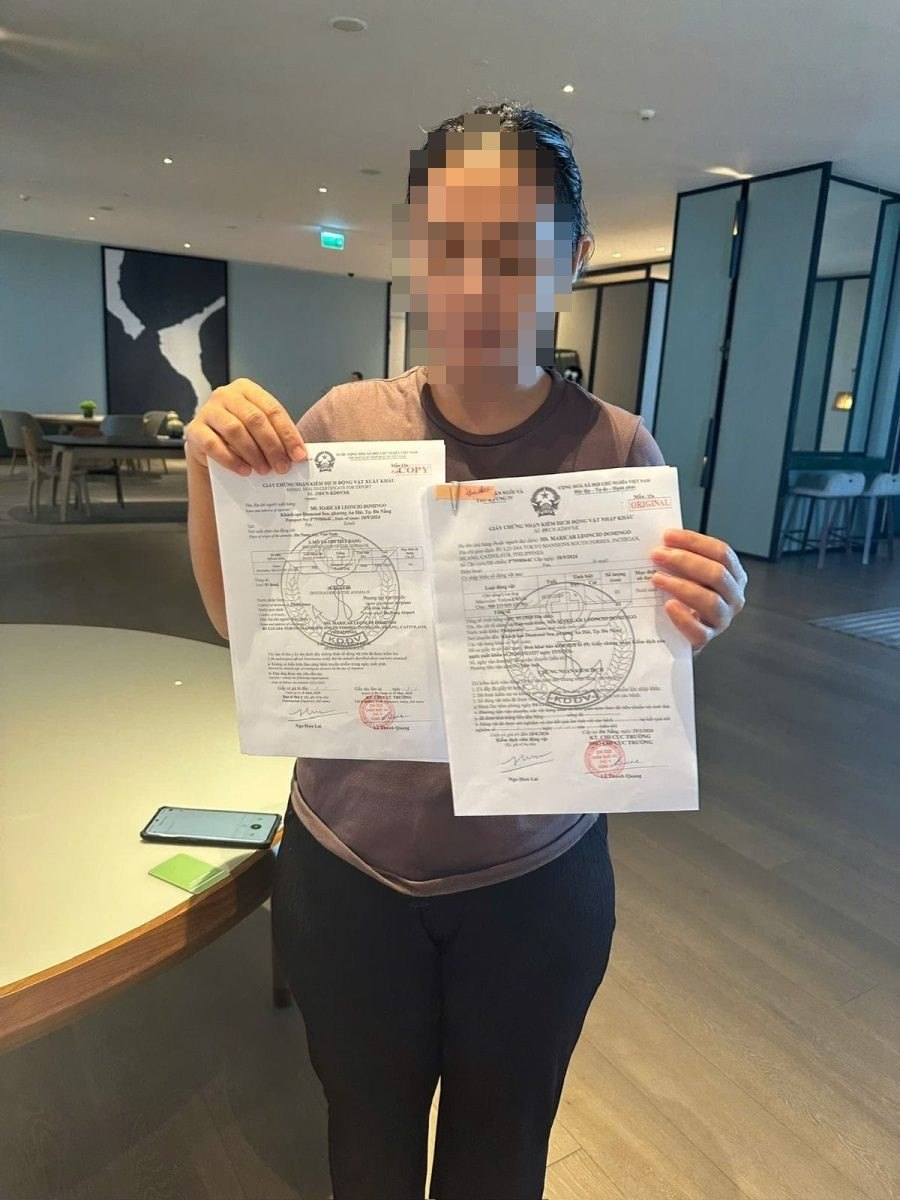
Bonus Window — Import Quarantine Declaration Filing (About 48 Hours Before Landing): Vietnam’s Import Quarantine Declaration Form (Đơn Khai Báo Kiểm Dịch Nhập Khẩu) must be filed with the Regional Animal Health Office before your pet lands. Declaring on arrival is allowed for pets traveling with their owner, but it leaves no time to fix errors, which can delay the airport process. The rule sets no fixed lead time; Daisy Pet files in person at the airport quarantine station about 48 hours before landing so the quarantine office can confirm the form (for cargo and shipments of more than 2 pets, it has one working day to do so), or earlier if that falls on a weekend or public holiday. Make sure to file Form 3 (Import Quarantine Declaration Form), which is required for all pet imports into Vietnam. Personal imports of 1-2 pets do not require quarantine isolation, whereas commercial shipments of 3 or more pets undergo mandatory central quarantine facility isolation.
2. Flight Options and Tarmac Heat Risks When Shipping Pets to Vietnam
Work forward from Day 1 to your confirmed flight date on Day 30. Every milestone below has a hard deadline — missing one forces you to restart from that point, not from the next step:
| Day | Mandatory Action |
|---|---|
| Day 1 | Verify microchip compliance (ISO 11784/11785, 15-digit). Book confirmed flight with pet reservation. Check rabies vaccine date — the injection must be no older than 12 months on your travel day. If the current vaccine was administered more than 12 months ago, a booster is required now. Administer rabies booster if the current certificate falls outside the 30-day–12-month window. Book your government-accredited veterinarian appointment for Day 20. Confirm your vet is authorized to issue government-endorsed health certificates for the destination country. |
| Day 15 | Purchase an IATA-compliant travel crate sized for your pet’s full standing height plus 10 cm clearance. Begin crate acclimatization — feed meals inside the crate and allow unsupervised rest periods to reduce travel-day stress. |
| Day 20 | Government/USDA-accredited veterinary examination. Clinical inspection of microchip, vaccination records, and overall health. Health certificate drafted at this appointment and submitted immediately to USDA APHIS (or equivalent) for government endorsement. Do not book this appointment earlier — the certificate must reflect recent clinical status. |
| Day 23 | Administer broad-spectrum internal and external parasite treatment. Coverage must include ticks and tapeworm (cestodes) — a single-agent treatment may not be sufficient. Use a combination product covering nematodes, cestodes, and ectoparasites. Record the product name, batch number, and date of treatment in the health certificate notes. |
| Day 25 | Receive endorsed government health certificate from USDA APHIS or equivalent authority. Verify all details: microchip number, vaccine dates, owner name, destination country. Begin preparing the Import Quarantine Declaration Form — gather flight details, arrival airport, and pet description for submission to the Regional Animal Health Office. |
| Day 28 | Submit the Import Quarantine Declaration Form (Đơn Khai Báo Kiểm Dịch Nhập Khẩu) to the Regional Animal Health Office about 48 hours before landing, in person at the airport quarantine station (earlier if that falls on a weekend or public holiday) — attach your airline ticket (cabin/AVIH) or Airway Bill (cargo). For arrivals at Tan Son Nhat (SGN): Chi cục Thú y Vùng VI. For arrivals at Noi Bai (HAN): Chi cục Thú y Vùng I. For arrivals at Da Nang (DAD): Chi cục Thú y Vùng IV. Keep the confirmed Form 3 with your travel documents. |
| Day 30 — Departure & Arrival | Present at quarantine station on arrival. Clinical examination by quarantine officer. Pet released to owner within 1–3 hours after documentation and inspection are complete. |
3. The 3 Deadlines You Cannot Afford to Miss
Most rejected shipments at SGN and HAN trace back to one of three failure points. These are not obscure rules — they are the three places where Vietnam’s requirements diverge most sharply from what owners have experienced in other countries, and a preview of the broader legal issues that delay pet importation worldwide, not just into Vietnam.
Failure Point 1 — The 12-Month Rabies Rule: The US, EU, and Australia all recognize 3-year rabies vaccines. Vietnam does not — at least, not unconditionally. If your pet received a 3-year rabies shot 15 months ago, the certificate is expired for Vietnam purposes. The vaccine type does not matter; only the date of the most recent injection relative to your travel date matters. Owners relocating from the US who have not vaccinated annually are the group most frequently affected. The fix is straightforward — a rabies booster — but it requires a minimum 30-day lead time before travel. Discovering this at Day 10 means delaying the trip.
Failure Point 2 — The 7-to-10-Day Health Certificate Window: The health certificate is not a document your regular private vet can produce independently. It requires a government-accredited or USDA-endorsed veterinarian, and the signed certificate must then go through a government endorsement process. In the United States, this means submission to USDA APHIS for an apostille or endorsement, which takes 3–5 business days in most states and up to 7 days during peak periods. The certificate must also be current — issued no more than 10 days before travel. This creates a narrow window: too early and it expires, too late and the endorsement process isn’t complete. The only reliable strategy is to book the government vet for exactly Day 20 and submit for endorsement the same day.
Failure Point 3 — The Import Quarantine Declaration Pre-Filing: The Import Quarantine Declaration Form (Đơn Khai Báo Kiểm Dịch Nhập Khẩu) is Vietnam’s advance quarantine import notification. It must be filed with the relevant Regional Animal Health Office — Chi cục Thú y Vùng VI for SGN, Vùng I for HAN, Vùng IV for DAD — before your pet lands. An owner who arrives without a pre-filed Form 3 has to declare on the spot, which leaves no time to fix errors and can add significant delay. The Regional Office for SGN operates 24 hours a day, 7 days a week, so there is no excuse for skipping this step. For full instructions, see our Vietnam pet import guide.
4. Import Quarantine and Customs Clearance Process in Vietnam
Understanding the airport clearance sequence removes most of the anxiety from the arrival process. Here is what happens in order, from the moment your flight lands to the moment your pet is in your arms:
- Step 1 — Quarantine Declaration Verification: The quarantine officer checks your confirmed Form 3 against your documents. If no Form 3 was filed in advance, you declare on the spot, which can take longer.
- Step 2 — Physical and Clinical Inspection: Your pet is briefly removed from the travel crate for a visual health assessment. The officer checks for obvious signs of illness, injury, or distress. The microchip is scanned and cross-referenced against the health certificate.
- Step 3 — Documentation Review: The health certificate, vaccination passport, and endorsement seal are reviewed against the Import Quarantine Declaration registration data (Form 3, which is the standard declaration used for all pet imports). All dates, microchip numbers, and owner details must match exactly.
- Airport Locations: At Tan Son Nhat (SGN), the quarantine station is operated by Chi cục Thú y Vùng VI and is staffed 24 hours a day, 7 days a week. At Noi Bai (HAN), the equivalent authority is Chi cục Thú y Vùng I. Da Nang (DAD) is also an approved entry point but operates with reduced staffing — avoid scheduling arrivals there outside business hours.
- Timeline: The full process from landing to release typically takes 1–3 hours for well-documented arrivals. Budget 3 hours to be safe.
- Cost at Airport: Airport quarantine inspection fees run approximately $350 – $450 USD for pets travelling as checked baggage (AVIH/PETC) and approximately $950 – $1,150 USD for Manifest Cargo shipments. For a full breakdown of all costs involved in the import process, see our pet shipping cost guide to Vietnam.
5. Transit Timing Considerations
If your routing to Vietnam includes a transit stop, the layover country introduces its own set of timing variables — even when no formal quarantine is required.
Singapore, Japan, South Korea, and Taiwan: Transiting through these airports with a pet in the hold does not trigger local quarantine requirements, provided the animal remains airside and does not pass through customs. However, some airports require advance notification regardless:
- KIX (Osaka Kansai) and NRT (Tokyo Narita): Advance notification to the airport animal quarantine office is required at least 48 hours before arrival, even for transit. File this alongside your Vietnam quarantine declaration preparation at Day 25.
- ICN (Seoul Incheon): Similar advance notification requirements for transit animals. Check directly with your carrier at least 72 hours before departure.
Long Transits (Over 12 Hours): Most carriers do not allow live animal check-in more than a few hours before a flight. For long layovers, coordinate with your airline and the transit airport’s animal facility to ensure water access and any required rest periods for your pet. A connecting flight the same day is strongly preferable to an overnight transit.
Manifest Cargo Routing: If your pet is travelling as Manifest Cargo rather than checked baggage, plan an additional 2–3 days into your timeline for cargo processing at the origin airport. Cargo shipments involve a separate airway bill, cargo facility acceptance, and independent flight coordination that does not move on passenger schedules. This is particularly relevant for large dogs over 32 kg, who are typically required to travel as Manifest Cargo regardless of owner preference.
Last updated 18 Oct 2026
Compiled by our specialists from the regulations in force on the date above, for reference only. Rules may change after this date. Please verify with the competent authorities or contact us for the most accurate information.