Every week, Daisy Pet receives questions from owners preparing to move their pets from Vietnam to Russia. The same handful of questions comes up repeatedly — often because the correct answer is buried in legal texts, or because popular answers online are out of date. This FAQ consolidates the most common questions with direct, accurate answers based on the current EAEU regulatory framework and 2026 airline conditions.
Documentation & Legal Requirements
Does my pet need a quarantine before entering Russia?
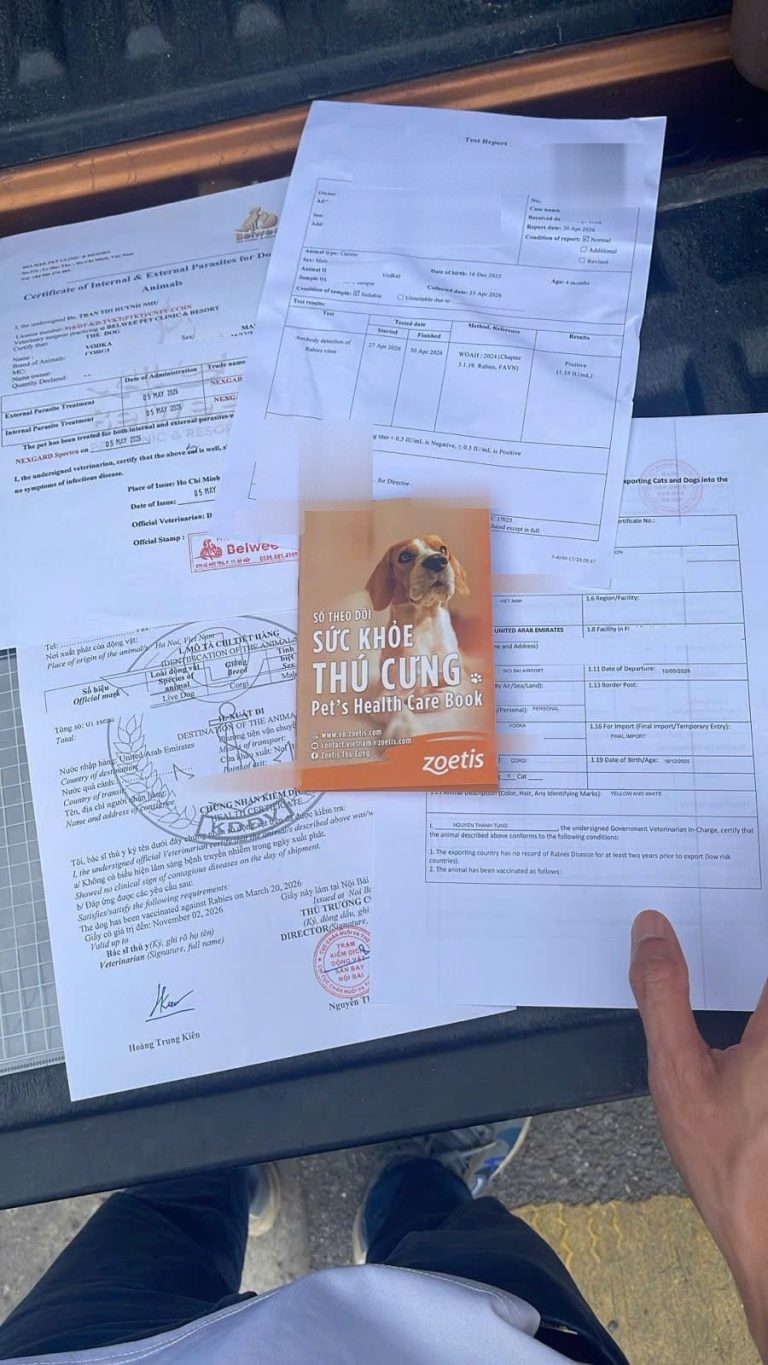
No. Russia does not impose mandatory quarantine for dogs and cats arriving with their owner, provided the animal has valid vaccination records and Form 15, the veterinary export certificate that Vietnam’s Animal Quarantine Station (Trạm Kiểm Dịch Động Vật) issues for every pet leaving for Russia. This is one of the key advantages of the EAEU framework compared to countries like Australia or Taiwan. If your documentation is complete, your pet clears border inspection and proceeds directly with you.
Do I need a rabies titer test (RNATT/FAVN) for Russia?
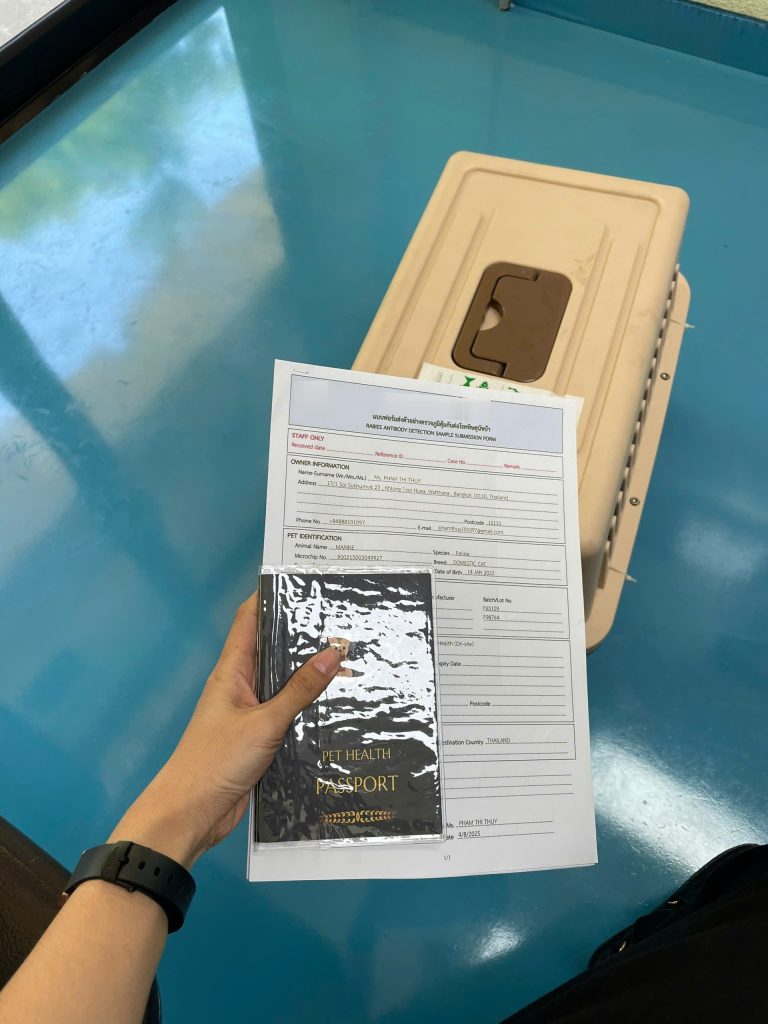
No — Russia does not require a rabies antibody titer test for standard personal pet imports from Vietnam. The EAEU framework (Decision №317, Chapter 40) accepts a valid rabies vaccination administered at least 30 days before departure without any confirmatory blood test. A titer test is only triggered in edge cases involving multi-year vaccines where the immunity validity period cannot be confirmed. For standard annual Nobivac, Rabisin, or equivalent vaccines — which is the norm in Vietnam — no titer test is needed.
Do I need a Rosselkhoznadzor permit?
Only if you are travelling with 3 or more pets, or if your pet is travelling unaccompanied (as Manifest Cargo without you on the same flight). For 1–2 pets travelling with their owner, no Rosselkhoznadzor permit is required — only Form 15, the veterinary export certificate issued by Vietnam’s Animal Quarantine Station. If you do need a permit (Form №1), it is issued free of charge through the Argus automated system on Rosselkhoznadzor’s website.
What vaccines does my dog need for Russia?
Under EAEU Chapter 40, dogs must be vaccinated against: Rabies (≥30 days before travel), Canine Distemper, Hepatitis (Adenovirus), Parvovirus, and Leptospirosis. The leptospirosis requirement can also be met through prophylactic treatment with dihydrostreptomycin — but vaccination is simpler and more widely accepted. All vaccines must be recorded in Form 15, the veterinary export certificate, with date, product name, batch number, and the veterinarian’s stamp.
What vaccines does my cat need for Russia?
Cats require Rabies (same 30-day rule as dogs) and Panleukopenia (Feline Distemper). Unlike many other destinations, Russia does not require Feline Herpesvirus (rhinotracheitis) or Calicivirus as mandatory EAEU import vaccines — though your vet may recommend them for the cat’s health regardless. All vaccines must be recorded in Form 15, the official veterinary export certificate.
Is a microchip mandatory for Russia?
Not legally — EAEU Chapter 40 explicitly states that animals without microchip or tattoo may be imported for domestic keeping. Russia is unusual in this respect. However, in practice, virtually all airlines require an ISO 11784/11785 microchip (15-digit, 134.2 kHz) as a condition of carriage — whether your pet flies AVIH on Vietnam Airlines’ direct Hanoi–Moscow route or as Manifest Cargo via a transit hub. Implanting a microchip is effectively mandatory for any Vietnam-to-Russia routing. Have it done before the first vaccination so all records link to the chip number.
Can I bring a puppy or kitten under 3 months to Russia?
Yes — Russia is one of the few EAEU countries with a defined legal pathway for young animals that cannot yet be vaccinated against rabies. Animals under 3 months without a rabies vaccine may still enter, using the same Form 15 veterinary export certificate that Vietnam issues for every pet on this route — adult or young, AVIH or Manifest Cargo. There’s no separate “standard passport” most pets use instead; Form 15 is the certificate Vietnam’s Animal Quarantine Station actually issues, together with a parallel domestic certificate (Mẫu 13a) from the same clinical exam. Note that the age at the time of departure is what matters — not the age at the time of documentation.
How long before travel must the clinical examination be done?
The clinical examination stamp in Form 15 must be dated within 14 days before the departure date. This is the most time-sensitive document in the set — it cannot be done early and stored. Plan your vet visit to fall within the 14-day window, and coordinate it with your airline booking confirmation so the dates align.
Flights & Transit
Are there direct flights from Vietnam to Russia for pets?
Yes — Vietnam Airlines operates a scheduled direct route between Hanoi and Moscow (VN63), with no transit stop. Pets that meet the airline’s criteria for AVIH — checked baggage in the aircraft’s temperature-controlled cargo hold, travelling on the same flight as their owner — can fly this route without any layover. Not every pet qualifies for AVIH: Vietnam Airlines has not published an exact weight or size threshold, so eligibility must be confirmed directly with the airline for your specific pet. Larger dogs, multiple pets, or animals travelling without their owner typically still route through a transit hub as Manifest Cargo — Istanbul (IST) via Turkish Airlines, Dubai (DXB) via Emirates SkyCargo, Doha (DOH) via Qatar Airways Cargo, and Tashkent (TAS) via Uzbekistan Airways remain the standard options for those cases.
Can my pet travel in-cabin or as checked baggage?
Yes, on the Vietnam Airlines direct route. Eligible pets fly AVIH — checked baggage in the aircraft’s temperature-controlled cargo hold, on the same flight as their owner — on the Hanoi–Moscow route (VN63). This isn’t the passenger cabin; the pet stays in the hold for the whole flight, but travels with you rather than as a separate shipment. For pets that don’t meet AVIH eligibility, or for routings through a transit hub, most airlines still require Manifest Cargo — a dedicated freight service where the pet travels on a separate cargo booking, potentially a different flight from the owner. Manifest Cargo costs more than AVIH, but it remains the standard option for larger pets or unaccompanied shipments.
What happens to my pet during the transit layover?
For most Manifest Cargo routes, the pet remains in the airline’s cargo facility during the transit. The animal is not passed through customs or subjected to the transit country’s import regulations (it stays “airside”). Handling standards vary by hub: Dubai (DXB) and Istanbul (IST) both have live animal handling facilities. Your pet will be checked, watered if needed, and re-loaded for the connecting flight. The airline’s cargo team is responsible for the animal during transit — this is one reason choosing an experienced carrier matters.
Which airport should my pet arrive at in Russia?
Pets must enter Russia through a designated veterinary inspection checkpoint. The main options for international flights are Moscow Sheremetyevo (SVO — Terminal E, vet post 24/7), Moscow Domodedovo (DME — international terminal), and St. Petersburg Pulkovo (LED). The full list of approved entry checkpoints is published on Rosselkhoznadzor’s website. Verify your entry point before booking — routing through an airport without veterinary inspection capability will result in your pet being held.
Costs & Logistics
How much does it cost to ship a pet from Vietnam to Russia?
Total cost depends primarily on your pet’s size, since airline cargo fees are calculated on chargeable weight (actual vs. volumetric, whichever is higher). Rough all-in estimates for 2026: small cat or toy dog under 5 kg — $1,000 to $2,800; medium dog 10–20 kg — $1,600 to $4,000; large dog 25–35 kg — $2,500 to $5,500; giant breed over 40 kg — $3,500 to $8,000+. These ranges span DIY to professionally managed relocations. See our full cost breakdown in the Pet Relocation Cost Russia 2026 guide.
What size crate does my pet need?
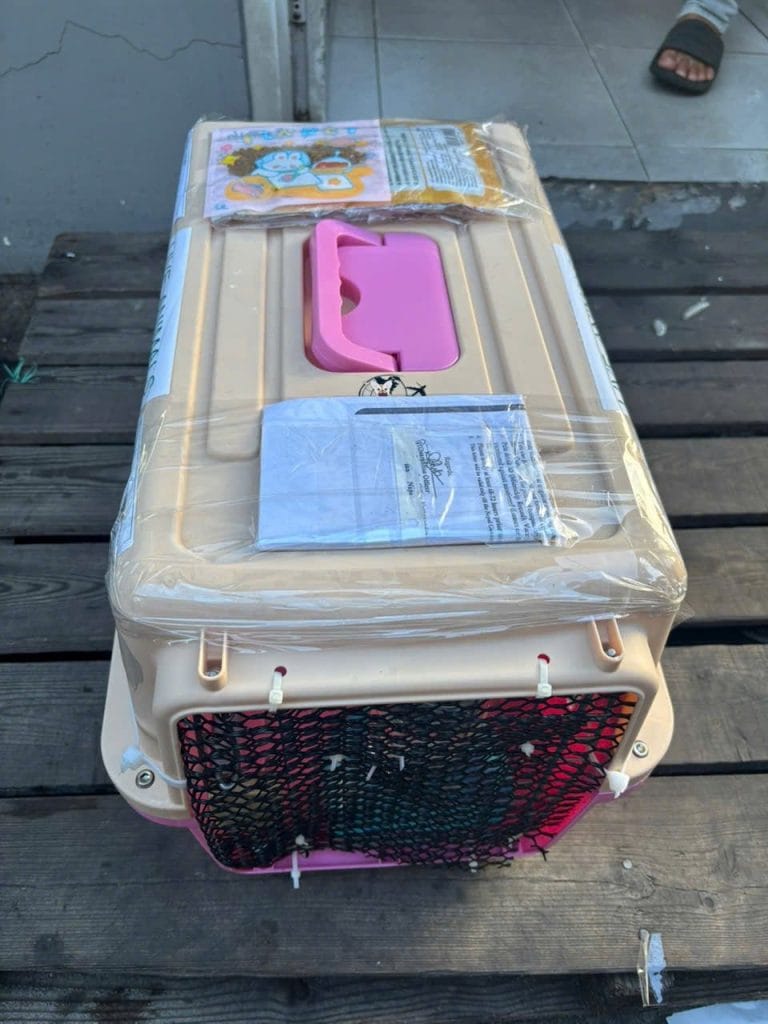
Whether your pet flies as AVIH or Manifest Cargo, it must travel in an IATA-compliant hard-sided crate. The crate must be large enough for the animal to stand, turn around, and lie down comfortably — IATA defines this as: height at shoulder × 1.1 = minimum crate interior height; body length from nose to base of tail × 1.5 = minimum crate floor length. Use these formulas to determine the correct size class before purchasing. Airline regulations on crate specifications are strictly enforced at check-in.
How far in advance should I start preparing?
Minimum 6 weeks before departure, ideally 8–10 weeks. The critical path is: microchip first → vaccines (rabies at least 30 days before travel) → clinical examination (within 14 days before travel) → Form 15 and Mẫu 13a from Vietnam’s Animal Quarantine Station → airline booking (AVIH on the direct Hanoi–Moscow route if your pet qualifies, otherwise Manifest Cargo via transit). The quarantine station’s process takes 5–10 business days in Vietnam. Airline slots on Russia routes book quickly, especially around holidays. Starting earlier gives you flexibility if any document requires re-issue. For a step-by-step timeline, see the Pet Shipping Timeline guide.

Do I need to use a professional pet relocation service?
No — the documentation framework is well-defined and technically manageable for owners who are willing to research it. That said, the Vietnam-to-Russia route still has real complexity: Form 15 and Mẫu 13a must be issued in the correct sequence by Vietnam’s Animal Quarantine Station, and the booking itself has two different paths — AVIH on Vietnam Airlines’ direct Hanoi–Moscow route for eligible pets, or Manifest Cargo through a transit hub for pets that don’t qualify. Where professional services add the most value is in figuring out which path applies to your pet and securing the right booking — the wrong choice (booking cargo when AVIH was available, or assuming AVIH eligibility that doesn’t hold) is one of the more common causes of delays. For a route with this many moving parts, a consultation is worth the cost even if you handle some steps yourself.
Additional Questions
Can I bring more than two pets to Russia?
Yes, but the documentation requirement changes. For 3–5 pets, you need a Rosselkhoznadzor import permit (Form №1) in addition to the standard veterinary passport for each animal. The permit is issued by Rosselkhoznadzor at no charge through the Argus online system. Apply well in advance of travel — the system can have processing delays. There is no per-animal fee, but each animal still needs its own complete set of vaccination records and passport.
Does Russia require pet insurance for imported animals?
No — Russia does not require pet insurance as part of the import documentation. Insurance is optional but worth considering for international flights, particularly for Manifest Cargo shipments. Airline cargo policies vary on liability for live animals, and international pet travel insurance can cover medical emergencies at the transit hub or destination. Cost is typically $50–150 for the journey.
For the full regulatory framework behind these answers, see our Russia Pet Import Laws 2026 guide. For airline-specific information, visit the Airlines for Pet Transport Vietnam to Russia guide. To get a personalised quote for your specific pet and travel dates, use our quote form or contact the team directly.
Last updated 23 Sep 2026
Compiled by our specialists from the regulations in force on the date above, for reference only. Rules may change after this date. Please verify with the competent authorities or contact us for the most accurate information.
Official sources cited in this guide
- Argus automated systemargus.vetrf.ru
- Rosselkhoznadzor’s websitefsvps.gov.ru