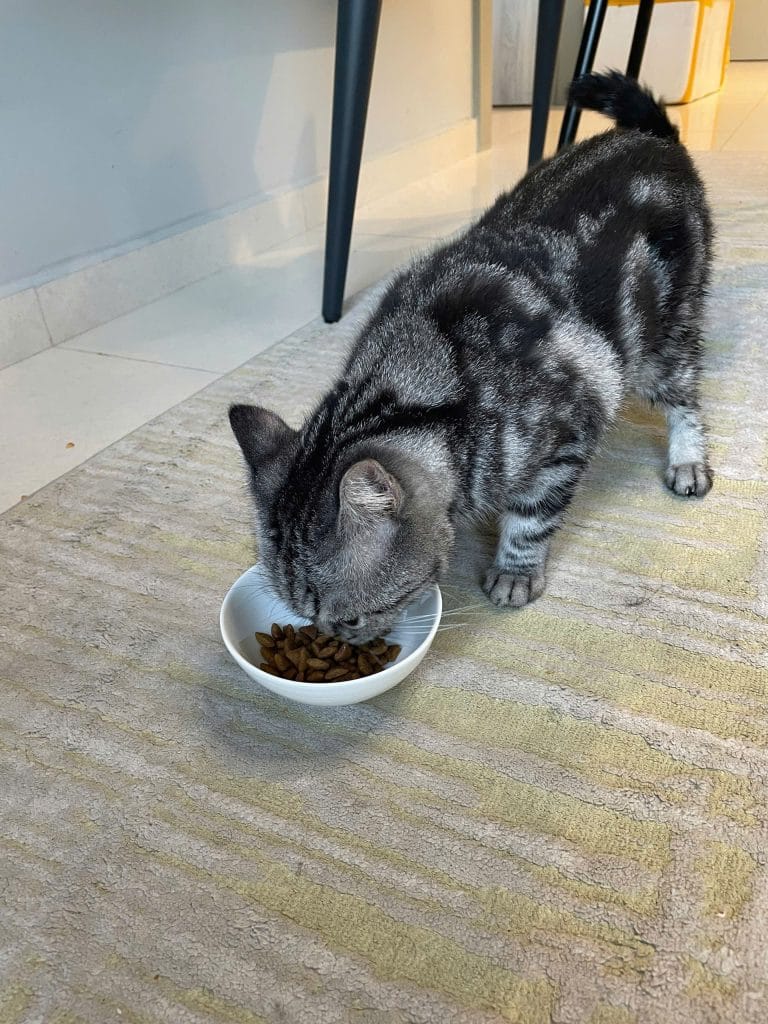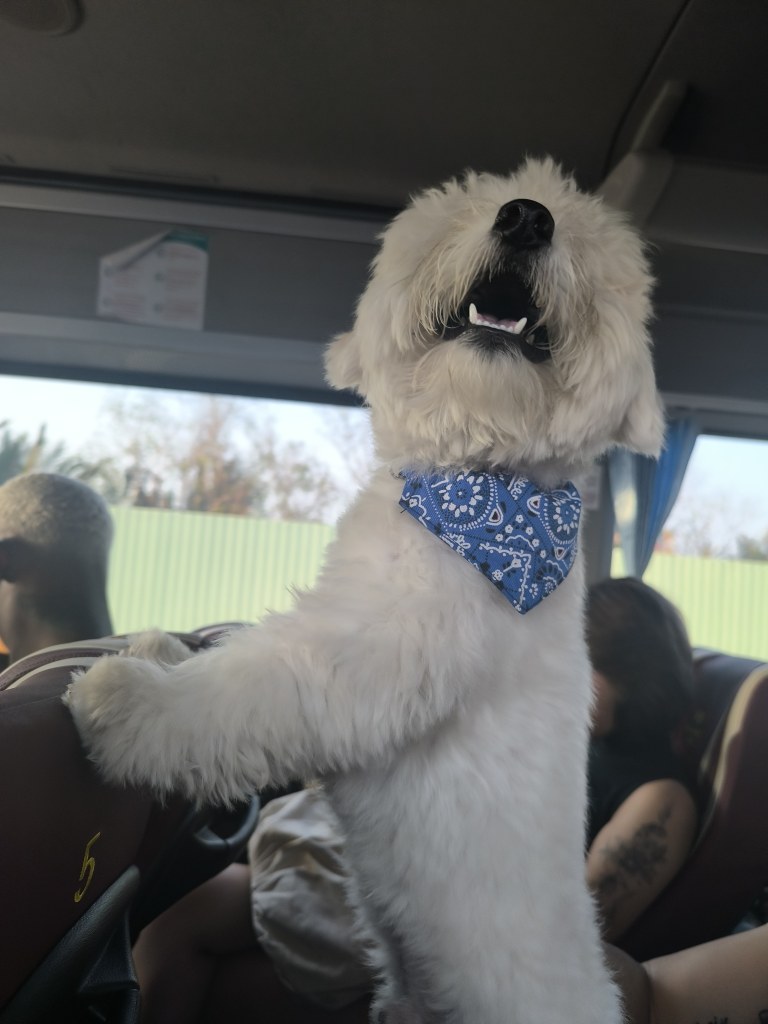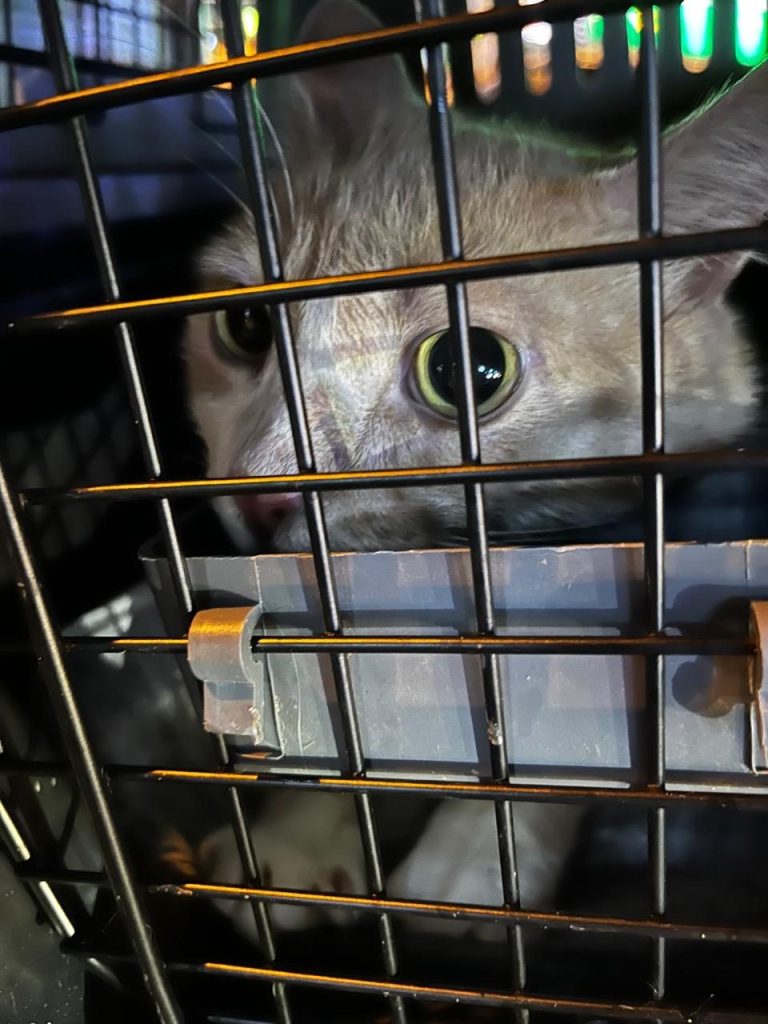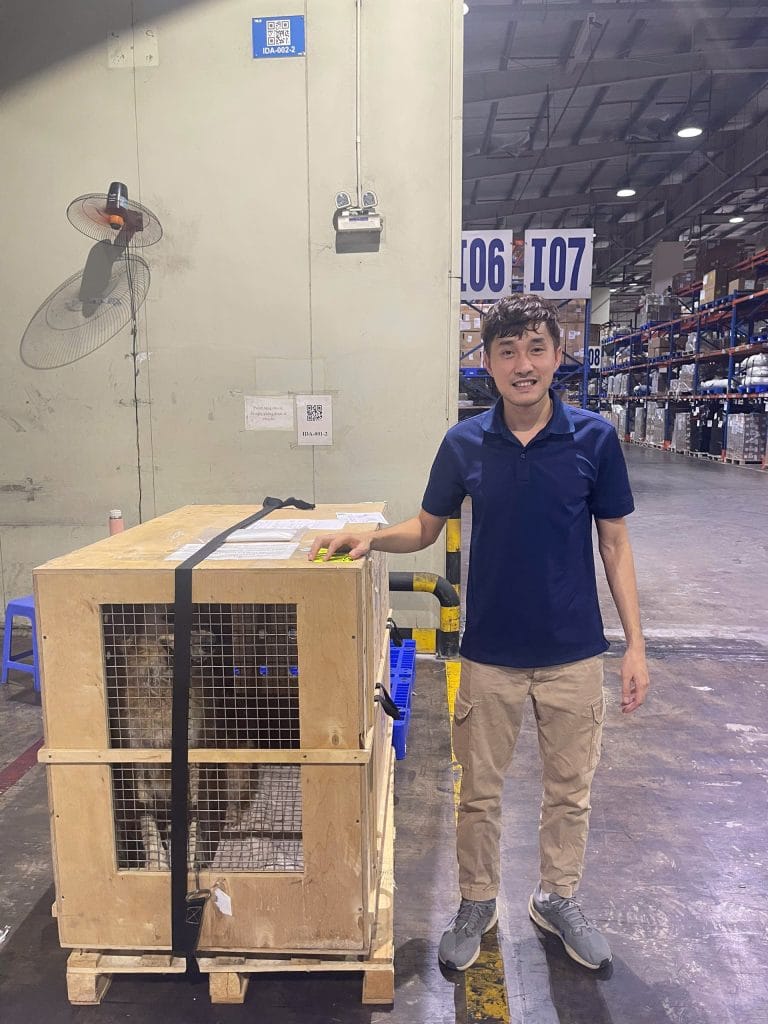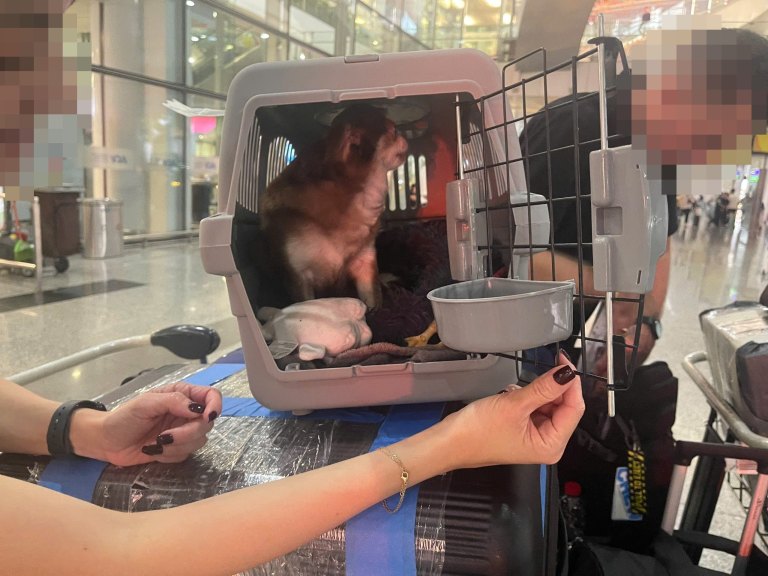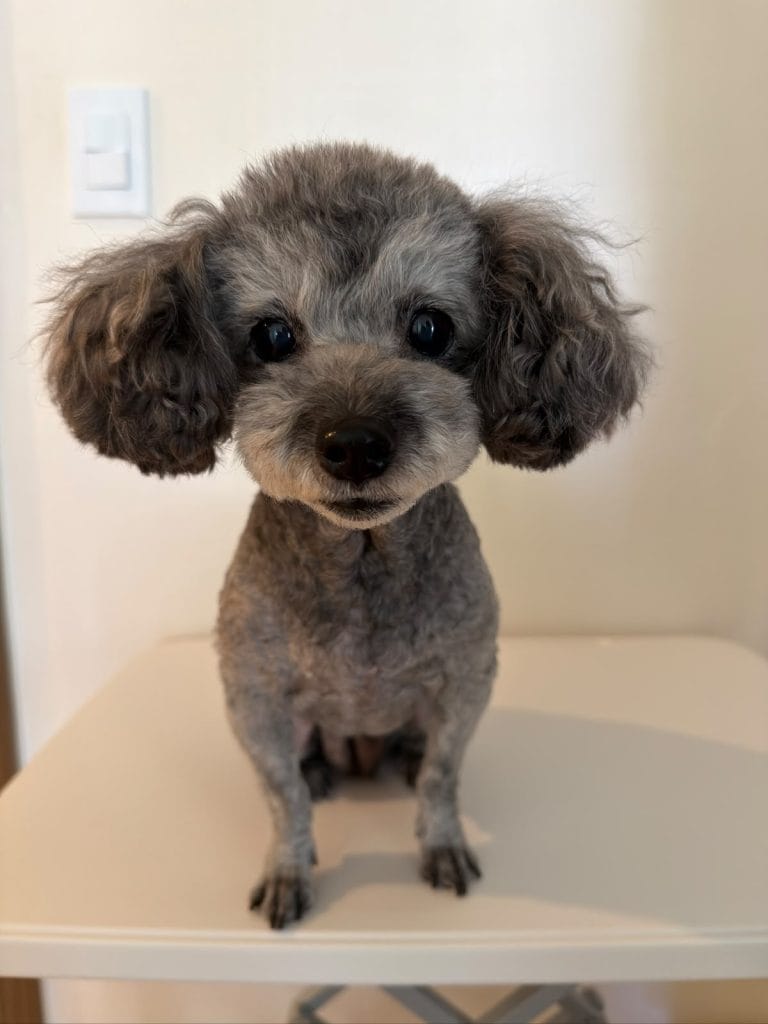
Tiantian is a ten-year-old silver Poodle who weighs 4.4 kilograms, and her October was a loop: Seoul to Da Nang on Korean Air KE457 on 4 October 2026, and Da Nang back to Seoul on KE460 eleven days later. Each leg ran on a different country’s paperwork — Korea’s on the way in, Vietnam’s on the way out — and the second set was easier because it was planned before the first flight. For anyone planning a pet import in Da Nang with a trip home at the end, that order matters as much as the flight numbers.
A ten-year-old with paperwork from two countries
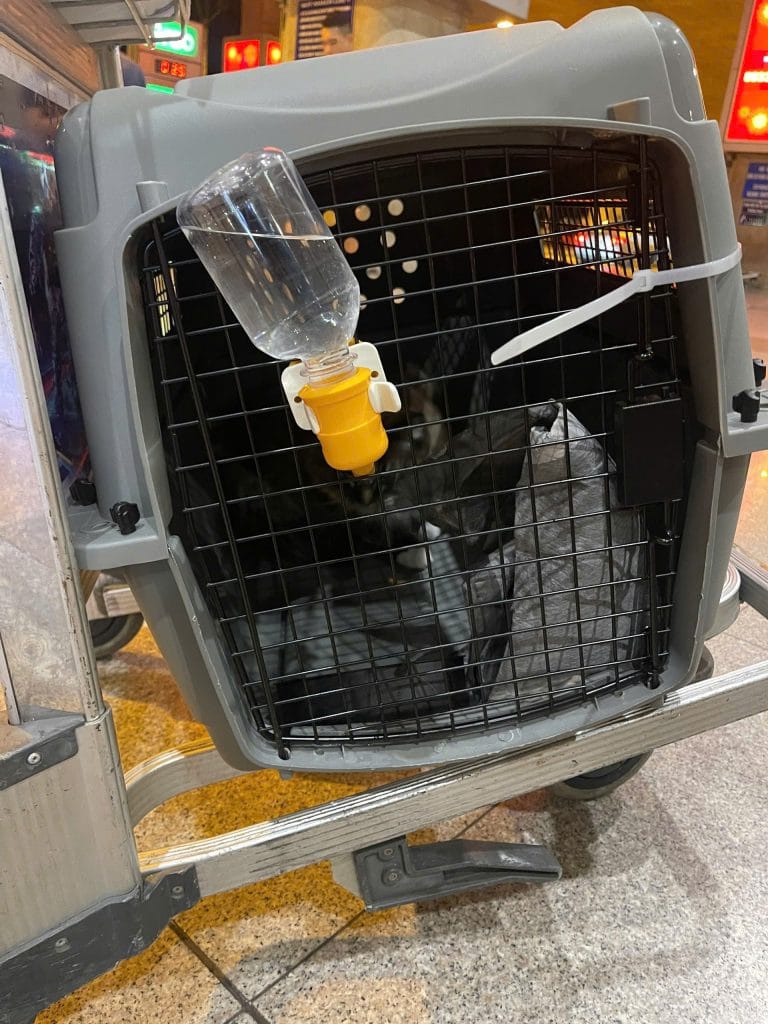
Tiantian was born in June 2016 and lives in Seoul with her owner. She travelled in the cabin, and her space was already booked. Daisy Pet’s first reminder was the one that trips up round-trip owners: the pet needs a confirmed space on both flights, not just the outbound one. Cabin, checked baggage and cargo each follow different airline rules, covered in our guide to airline options for pets flying to Vietnam.
Her records came from more than one place. Her vaccination booklet is in Chinese and carries a rabies entry from January 2026, and a laboratory in China tested her rabies antibodies in February 2026 at 10.26 IU/ml. The Korean half of the file was completed in the final week before departure.
What the Korean paperwork held — and what Vietnam actually asks for
The export side was arranged in Korea by Tiantian’s owner. Daisy Pet’s part began with reading that set against what Vietnam requires on arrival, the declaration and quarantine certificate explained in our Form 3 and Form 15a guide. The folder contained:
- A veterinary certificate dated 30 September — issued by a Seoul animal hospital four days before departure, recording her weight, microchip, vaccines and parasite treatments.
- A rabies vaccination on 10 July 2026 — 86 days before the flight, well past the minimum in our 30-day preparation timeline, and still valid for a year.
- Korea’s official quarantine certificate — issued on 30 September by the Animal and Plant Quarantine Agency for flight KE457, as an original and a duplicate.
- The February antibody test — not a Vietnamese requirement, but part of her history.
One detail is easy to miss: the Korean certificate lists only the rabies vaccination given in Korea. The January entry and the February antibody result sit on other documents, which is why Daisy Pet asked her to carry every original — the vaccination record, the Korean export documents, the antibody result and any other veterinary papers — rather than a tidy summary. A fuller walk-through of the Korean side is in our guide to bringing a pet from South Korea.
Landing in Da Nang: half an hour from touchdown to the exit
On 1 October, Daisy Pet sent the arrival plan: a fast-track immigration service, with a staff member holding a name board near the immigration area, followed by baggage claim to collect her luggage and Tiantian. The night before the flight, the team sent a reference photo of the “Welcome to Vietnam” sign so she would know what to look for, and asked her to check that evening that every original document was with her.
Arrival day, in Vietnam time:
- 14:21 — Tiantian’s owner messages that the plane has landed and is taxiing.
- 14:28 — She reaches the arrivals area and cannot see the name board.
- 14:29 — She spots the fast-track staff member.
- 14:30 — The staff member takes her passport to start the immigration formalities.
- 14:50 — She messages that she is out of the airport.
That is about half an hour from the moment the aircraft was still taxiing to a message from outside the terminal.
The return leg: a Vietnamese export certificate for Korea
Her owner had booked the return before arriving: Korean Air KE460, leaving Da Nang at 22:55 on Thursday 15 October and landing at Incheon at 05:30 the next morning. On 5 October she asked whether Tiantian would need a Vietnamese quarantine certificate to fly home, and the answer was yes. The health examination for that certificate was done at the Government Veterinary Office in Da Nang the same morning, and on 6 October Daisy Pet told her the documents were with the office awaiting approval, with the certificate expected on 13 October, or 14 October at the latest.
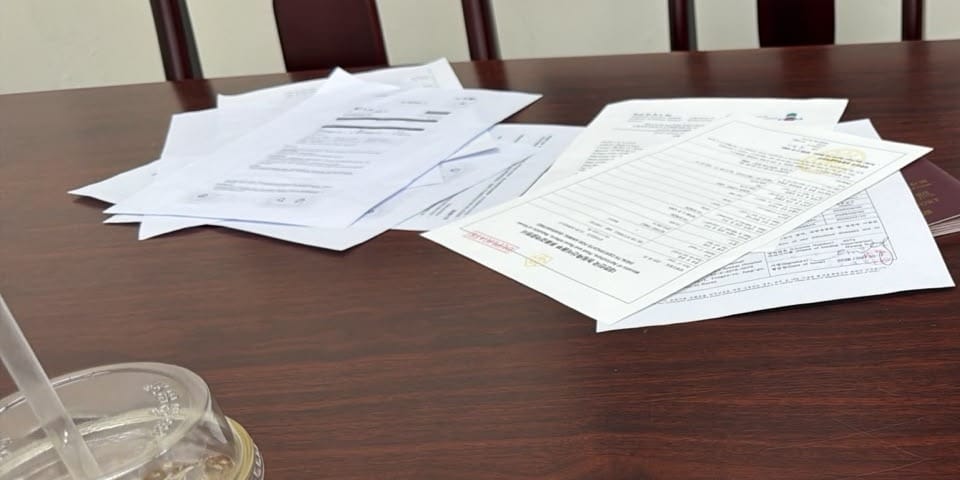
The certificate is Vietnam’s Form 13a (Mẫu 13a), the animal health certificate for export. Tiantian’s is dated 12 October, three days before the flight, and was issued by the Central Regional Animal Health and Production Office. It names Korea as the destination and Da Nang Airport as the point of exit, and under the requirements it certifies it lists two items: the rabies vaccination of 10 July 2026, and the antibody result of 10.26 IU/ml from the blood sample taken on 25 February 2026. The validity printed on it runs to 11 November 2026.
This is where the antibody test in her folder earned its place. Vietnam does not ask for one on import, but the export certificate for Korea carries the result. A test started after arrival would have meant sending blood to a recognised international laboratory and waiting for the report. Tiantian’s was already done in February, and her 10.26 IU/ml is well above the 0.5 IU/ml threshold set out in Korea’s import rules for pets from Vietnam.
Two days before the flight: parasite treatment and the handover
Her Korean certificate already recorded internal and external parasite treatment on 30 September. Daisy Pet treats every pet for internal and external parasites before it leaves Vietnam, whether or not the destination asks for it, so Tiantian had another round at a veterinary clinic in Da Nang on 13 October, two days before departure, and the clinic issued a treatment certificate the same day. When her owner asked whether it was safe for a ten-year-old, the answer was that this is routine preventive treatment, generally safe when a veterinarian prescribes it at the correct dose, and not a sign that she had parasites.
The export certificate was ready while she was still at the clinic, and a Daisy Pet team member set off to bring it there. She had to step out, so she asked for it to be delivered to her hotel instead, and the documents were handed over there.
On the evening of 14 October, Daisy Pet sent the pre-flight checklist: arrive at the airport three hours before departure for the pet check-in, and carry the originals — the export certificate, the vaccination records, the antibody test report, the health certificate and the parasite treatment certificate. One more instruction: after check-in, make sure every original has been handed back and keep the folder in hand luggage, because documents are sometimes left behind at the counter, which causes problems with the import procedures on arrival.
On the morning of the flight, a Daisy Pet team member checked the file once more and found one wrong digit in the microchip number on the parasite treatment certificate. It is a clinic document, not a government one, but every paper in a file for Korea should carry the same chip number. Daisy Pet asked the clinic to correct it, and the corrected certificate reached her hotel within the hour.
Back to Seoul: what Korea checks on arrival
On the night of 15 October, Tiantian flew home to Seoul with her owner on KE460. Early the next morning, her owner messaged that she and Tiantian had arrived in Korea smoothly.
Korea checks three things for a pet arriving from Vietnam: the government export certificate, a matching ISO microchip and a rabies antibody result of at least 0.5 IU/ml. The blood for that result must be drawn within the 24 months before arrival, so her February 2026 sample covers a return to Korea until February 2028. A pet that meets these rules is released at Incheon the same day. The full steps are in our guide to shipping a pet from Vietnam to South Korea.
What Tiantian’s case shows for any pet import in Da Nang
Six checks came out of this case:
- Plan the return before you leave. A confirmed airline space for both flights, and any antibody test, are easier to arrange at the start than from the middle of the trip.
- Say you are flying back from the start. Tiantian’s export file was opened in her first days in Da Nang, and her Form 13a was issued three days before the flight home.
- Carry every original. Each document records one part of the history, and the Korean certificate shows only what was done in Korea.
- Treat for parasites before departure. Daisy Pet does this for every pet leaving Vietnam; Tiantian’s certificate was dated two days before her flight.
- Match the chip number on every paper. Korea scans the chip against the certificate, so a clinic certificate with a wrong digit is worth fixing before the flight.
- Keep the folder with you after check-in. Check that every original comes back from the counter before you walk away.
A round trip through Da Nang runs on two sets of paperwork, and the second is far easier to build when it is planned alongside the first — for any pet import in Da Nang that ends with a flight home, both belong in the plan before the first flight. The full sequence for arriving pets — exporting country, airline, then Vietnam — is laid out in our overview of how pet import to Vietnam works.
Last updated 21 Oct 2026 · First published 5 Oct 2026