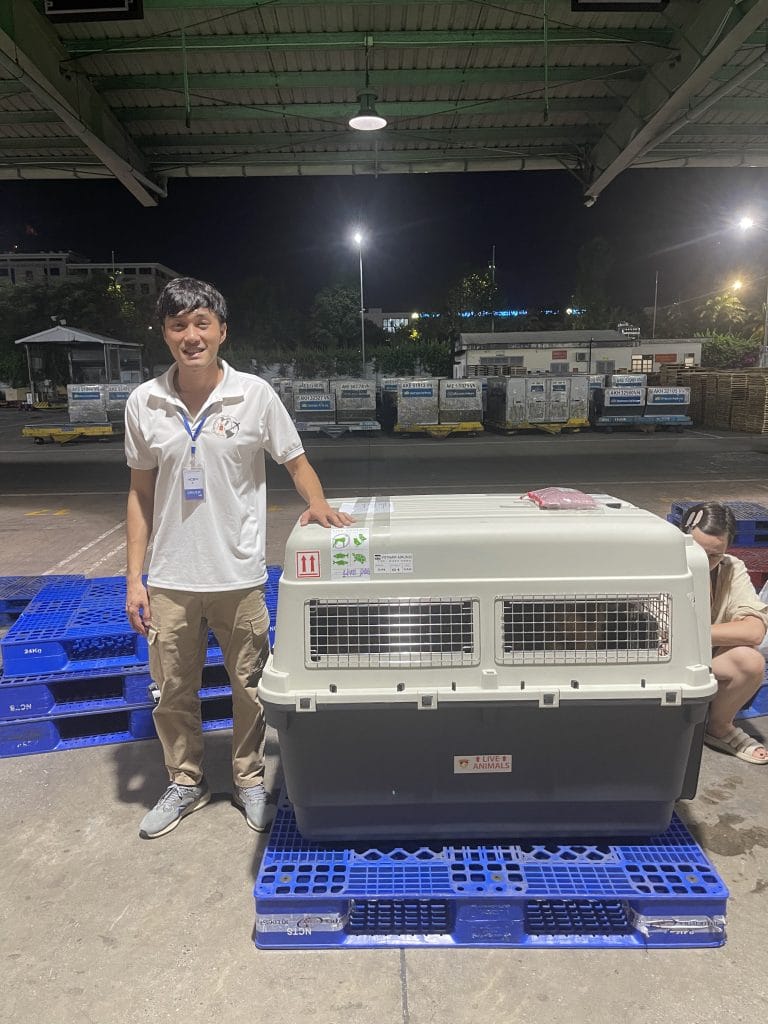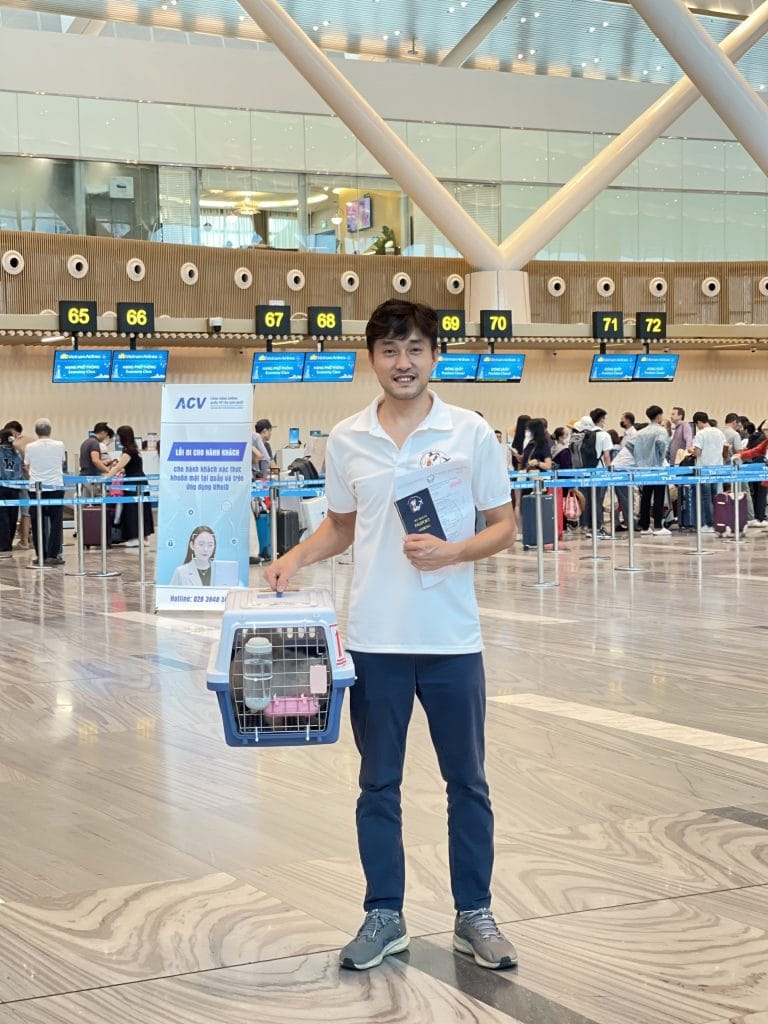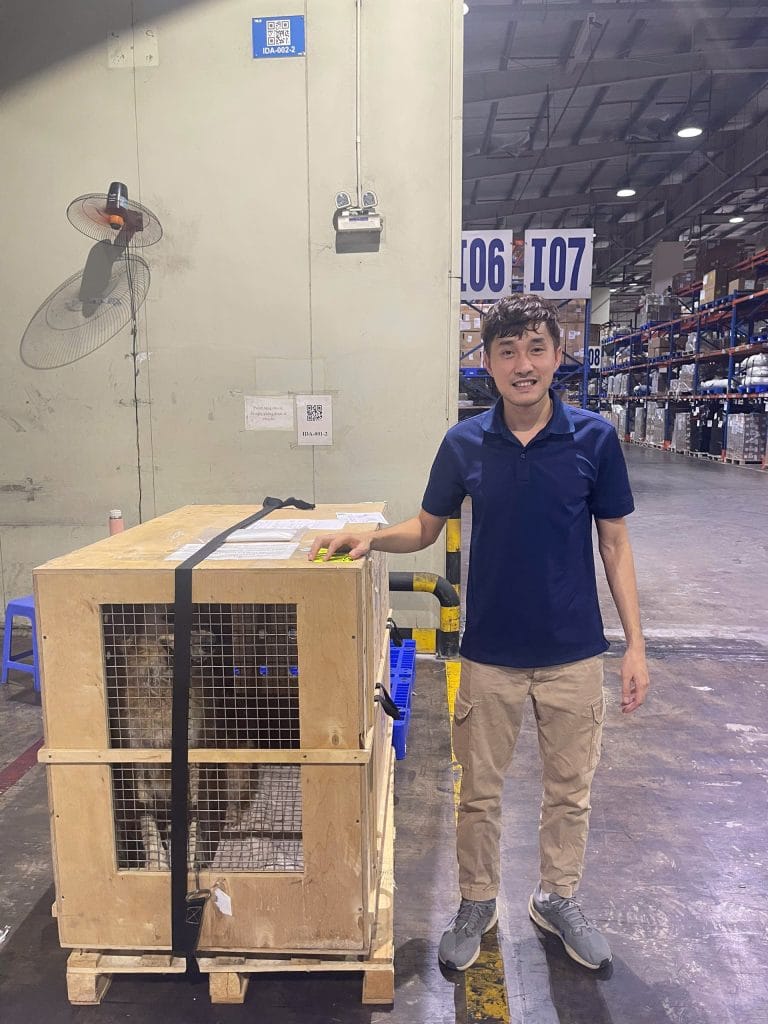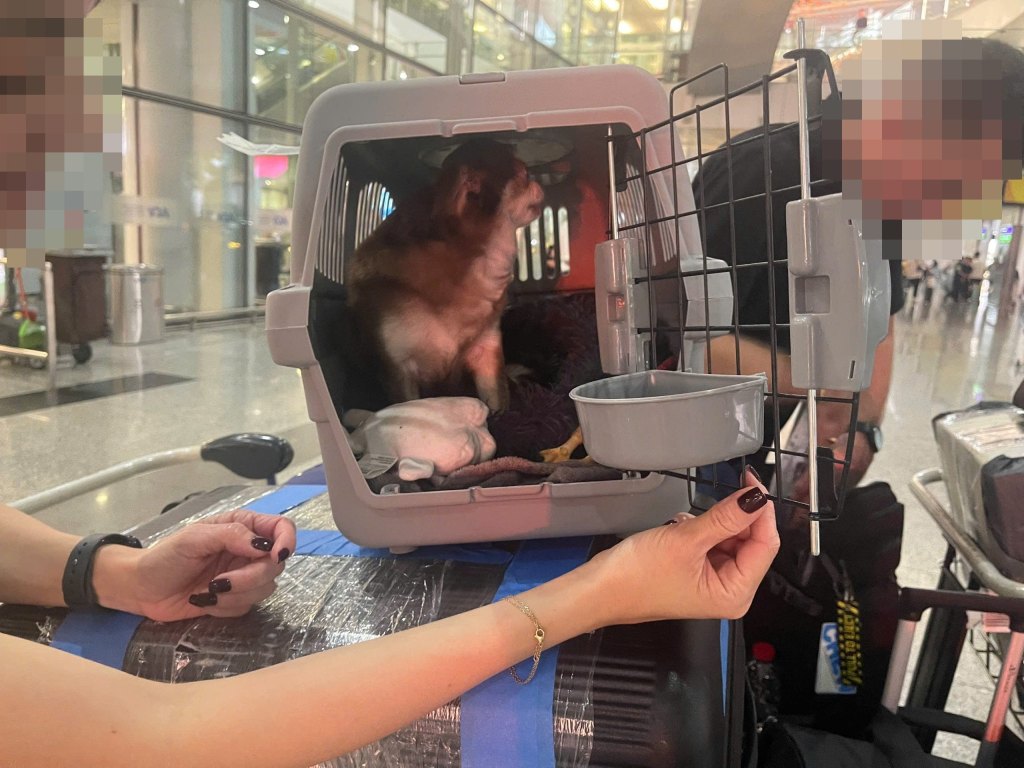
Milka is ten years old, weighs three kilograms, and has been through more rabies boosters than most dogs see in a lifetime. On 7 September 2026, she landed at Noi Bai International Airport on Emirates flight EK394 from Dubai — and for the next hour and forty-two minutes, her family was split in two by the very process meant to bring them back together.
A small dog with a well-traveled passport
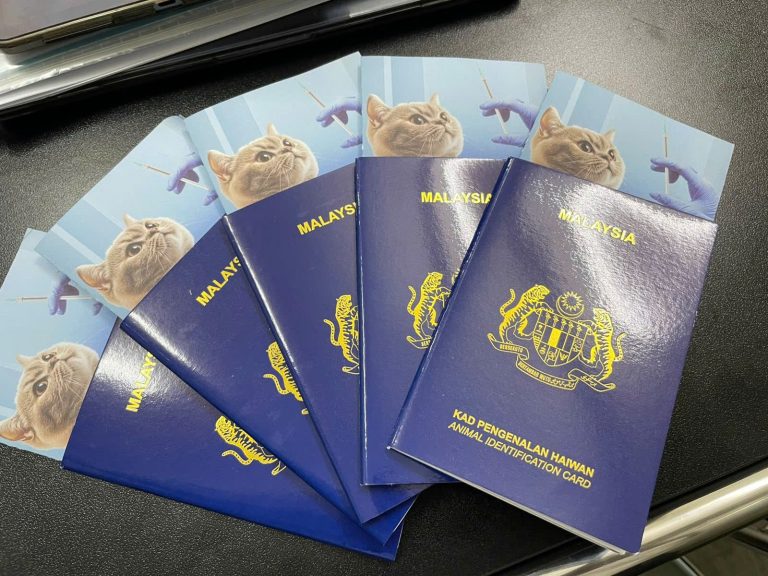
Milka belongs to a French couple living in Hanoi. She’s a long-haired Chihuahua, chocolate-and-tan, microchipped since 2017 and carrying an EU pet passport that goes back just as far. By the time she flew to Vietnam, that passport already held five separate rabies vaccination entries dating back to 2017: Rabisin, then Rabigen mono, then three rounds of Nobivac Rabies. Her most recent booster before this trip was recorded more than two months before departure.
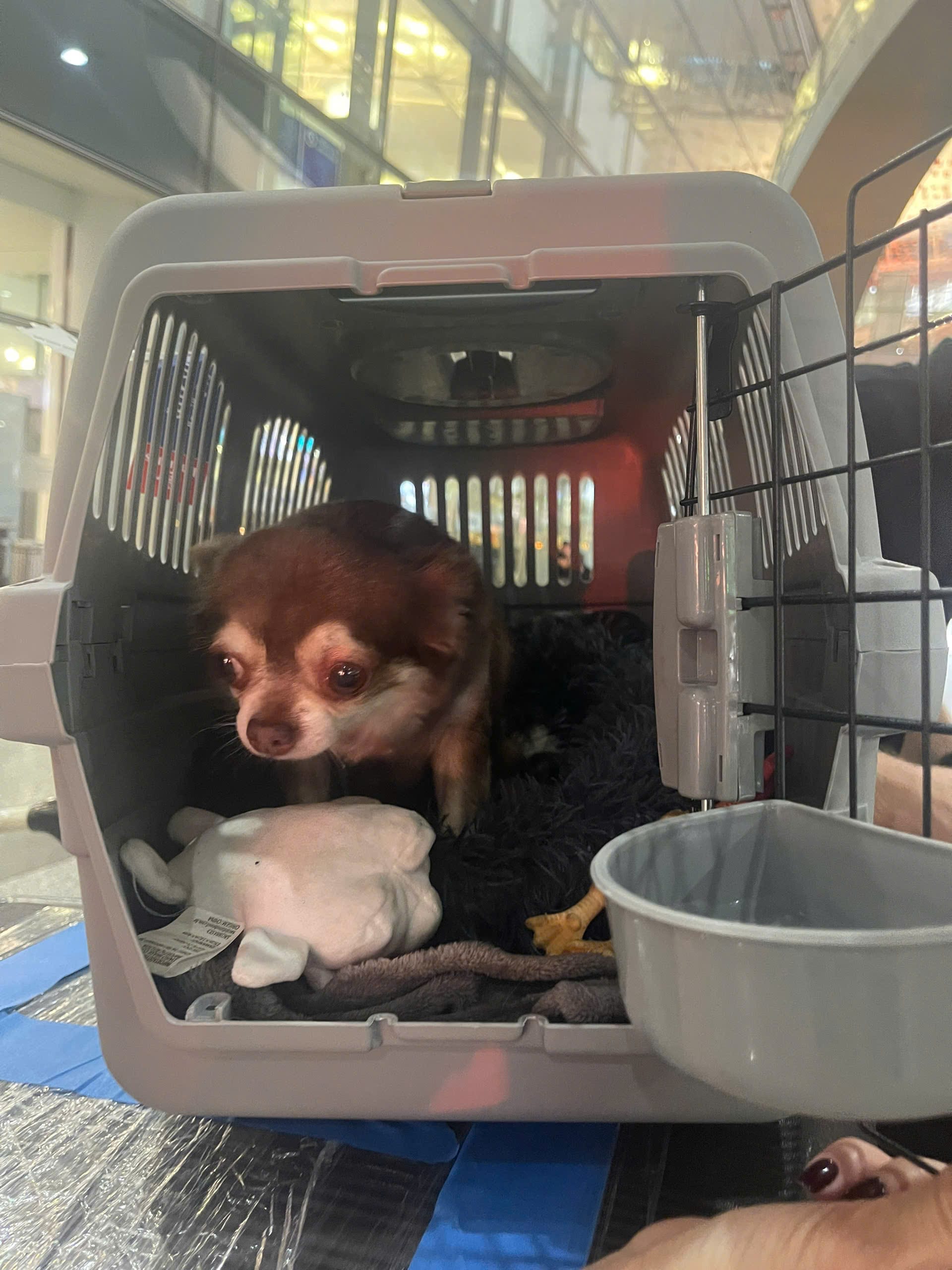
This wasn’t Milka’s first relocation. But it was the first time her paperwork trail crossed two countries that had never worked together on her file before.
Two countries, two signatures on the same shipment
A partner agency in Dubai handled Milka’s export side entirely — the UAE Ministry of Climate Change and Environment issued her veterinary health certificate on 2 September 2026, valid until 1 October 2026. Daisy Pet was never involved in that half of the file. Our job started only once Milka’s flight touched Vietnamese soil, coordinating the import side of a Dubai-to-Vietnam relocation that someone else had already started on the other end.
That handoff between two unrelated providers is more common than owners expect, and it means the receiving side can’t simply assume the folder handed over at the airport is complete for Vietnamese requirements. The moment Milka’s family landed, we still needed:
- A valid export health certificate naming the importer, the microchip number, and the flight — the UAE-issued document above.
- Full vaccination history, which for Milka meant reading her entire EU pet passport, not just the most recent entry.
- A same-day Certificate of Declaration — Vietnam’s own quarantine declaration form — filed with the Noi Bai Airport Animal Quarantine Station on arrival, regardless of what was already approved in Dubai.
The practical lesson from cases like this: an owner who’s just been handed a “complete” folder abroad often assumes Vietnam’s side is a formality. It isn’t. The declaration to Noi Bai’s quarantine station is filed fresh, in-country, the same day the animal lands — no matter how thorough the export paperwork was.
One family, two queues
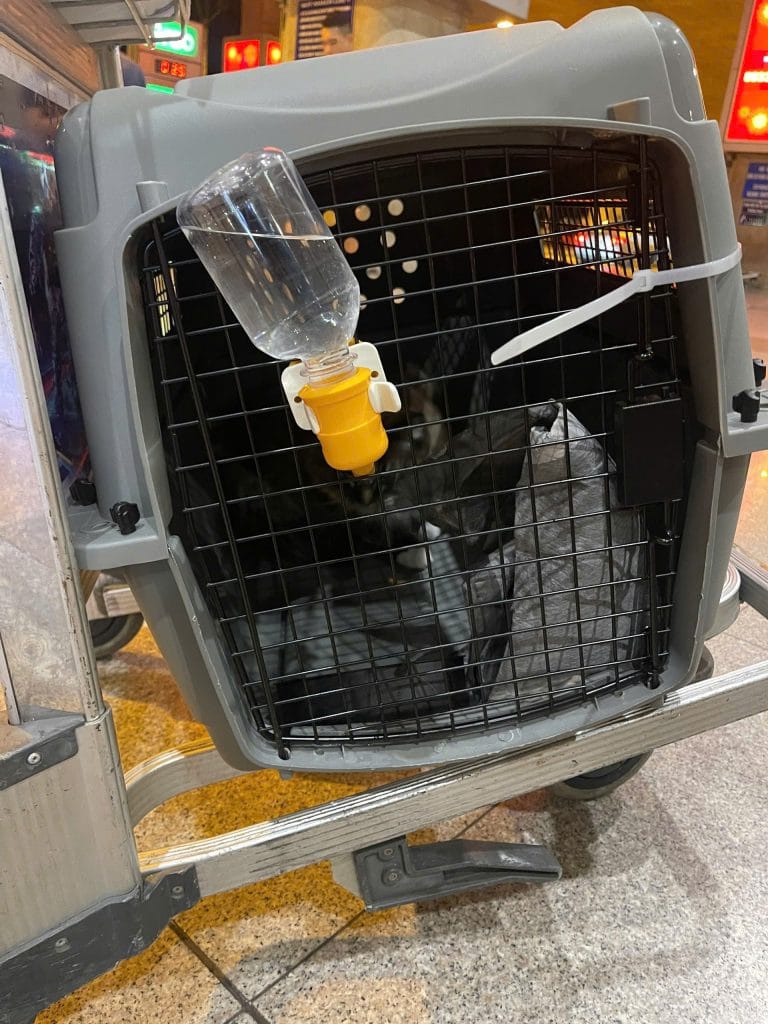
Milka traveled as Checked Baggage (AVIH) on the same Emirates flight to Vietnam as her owners, who sat up front in business class. That part went smoothly. What didn’t was simpler than any regulation: when EK394 landed, the couple were pulled into two different lines — the wife to baggage claim with Milka’s carrier, the husband to the visa-on-arrival counter, holding both passports and Milka’s original documents.
“I need to get bags with me, I can’t do it physically alone. Give us a few minutes to let my husband come,” the wife wrote in the family’s group chat with our team at 17:02. Fourteen minutes later, she was still waiting: “I’m still waiting for husband. Cause all documents for pet with him.”
It’s a scenario worth planning for on any two-passenger import: the pet, the luggage, and the paperwork can end up in three different hands within the same fifteen minutes.
The handoff at Belt No. 3
Our team in Hanoi worked the two queues in parallel rather than waiting for the family to reunite first:
- 16:07 — EK394 lands. Daisy Pet notifies the government veterinary office at Noi Bai that Milka’s shipment has arrived.
- 16:28 — The wife is still at passport control with Milka’s carrier; the husband remains in the visa line with the documents.
- 16:57 — She collects Milka at the luggage belt. “He is with me,” she writes, with a photo.
- 17:19 — Our team instructs her to bring Milka straight to the Animal Quarantine Office at the end of Baggage Claim Belt No. 3 rather than wait for her husband — a video call walks her through exactly where to go.
- 17:23–17:27 — A second video call confirms Milka is inside the quarantine office; her husband is still queued for his visa, so the family waits there together on the paperwork.
- 17:49 — The family clears quarantine and steps out to meet our staff waiting at Gate A3.
From touchdown to walking out with Milka: about one hour and forty-two minutes — most of it spent not on the quarantine check itself, but on getting one family and one folder of documents into the same room.
Reunited
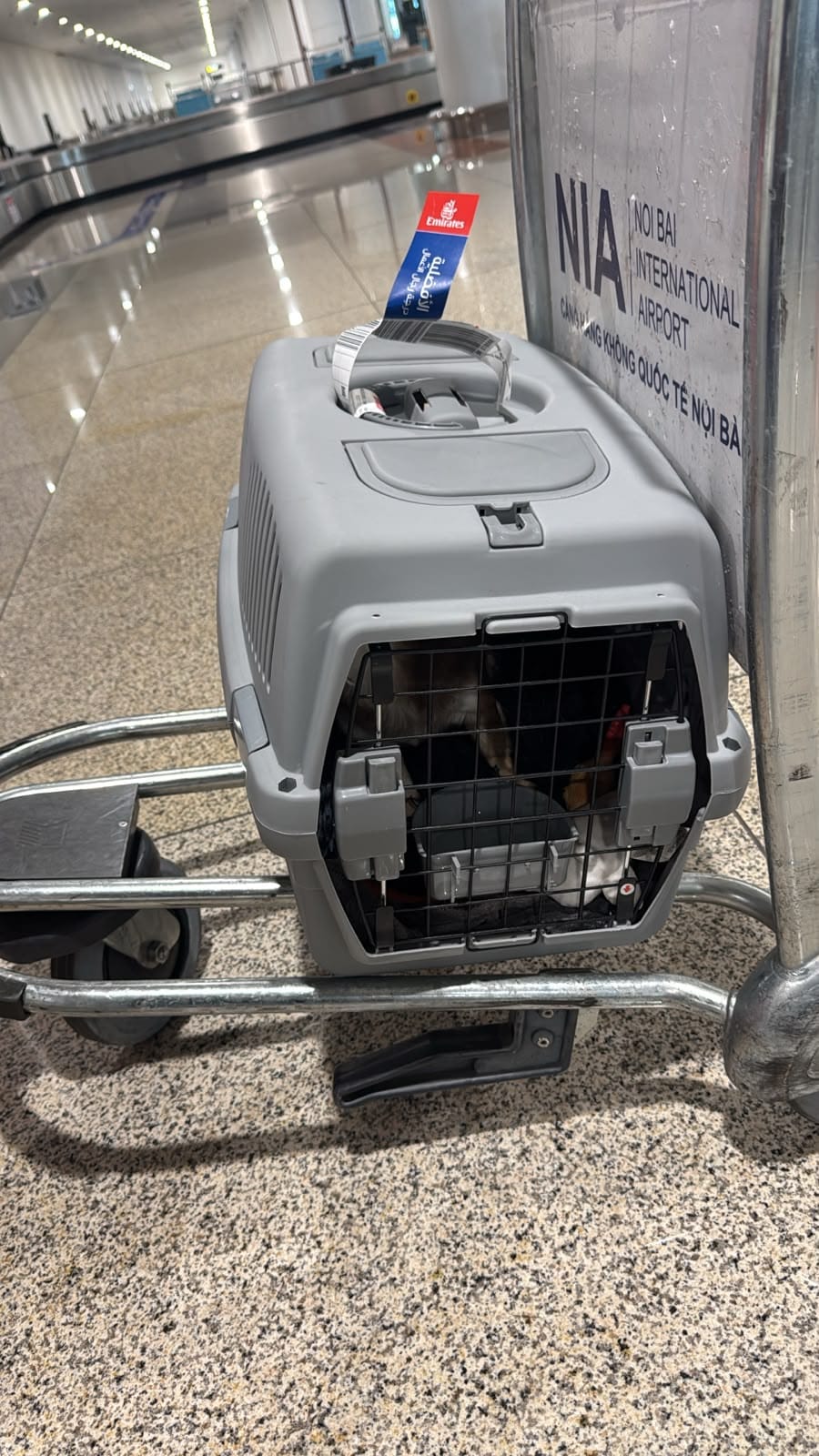
“Thank you again for your help and support,” the husband wrote once the family was through. Our team’s reply summed up the only outcome that actually matters in a case like this: “We wish you and your family a wonderful time with your pets in Vietnam.”
What Milka’s case means for anyone importing a pet to Vietnam
A senior dog, a fully documented EU pet passport, and an export agent who did their part correctly abroad still weren’t enough to make the arrival itself frictionless — because the friction wasn’t legal, it was logistical. The 30-day preparation timeline matters, but so does something rarely written into any guide: deciding in advance which family member carries the pet’s documents through immigration, and which one carries the pet. When those two things end up on opposite sides of a queue, the fastest fix is a local team that can guide each side separately instead of waiting for the family to reconnect on its own.
Published 16 Sep 2026