Most of the framework in the Indonesia pet import guide reads as a list of rules until it’s applied to an actual pet, on an actual flight, against actual deadlines. Qi Xi’s case — a British Shorthair relocating from Ho Chi Minh City to Jakarta in August 2026 — shows where that framework holds up, and where a small planning decision made months earlier nearly cost more than it needed to.
Part 1: Meet Qi Xi
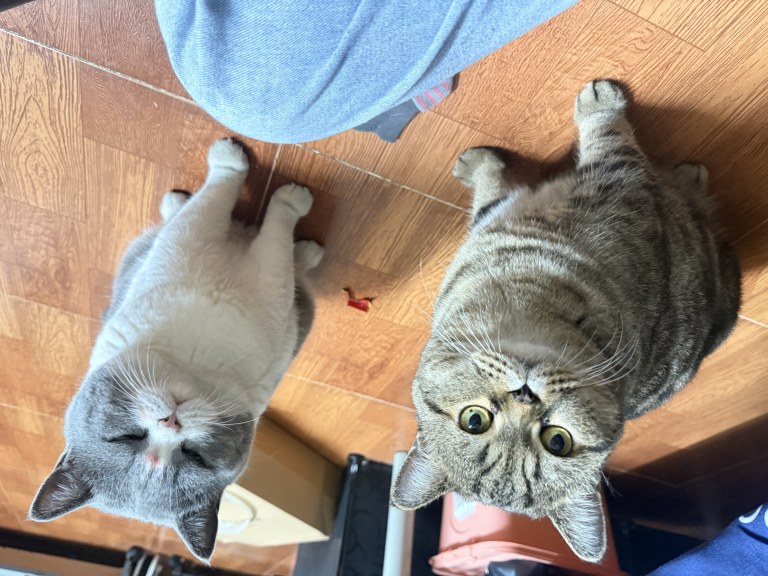
Qi Xi is a male British Shorthair, grey coat, born May 2022, relocating with his owner, who was moving from Ho Chi Minh City to Jakarta for work. The route: Soekarno-Hatta Airport (CGK), not Bali, which meant the direct-entry ban covered in why pets can’t fly directly into Bali never came into play for this case.
Part 2: The Detail That Almost Cost More Than It Needed To
Before contacting a transporter, Qi Xi’s owner had already arranged the rabies antibody titer test — through a laboratory in Germany, with the blood sample collected in Ho Chi Minh City and shipped overseas for processing. The test came back well within range, but it didn’t need to leave the country. A laboratory in Vietnam can run this exact test, and its result is accepted on the Indonesia route — see the RNATT guide for how the test itself works. The lesson from this case is a scheduling one: confirm where a titer test needs to run before booking a lab, not after.
Part 3: Choosing the Crate
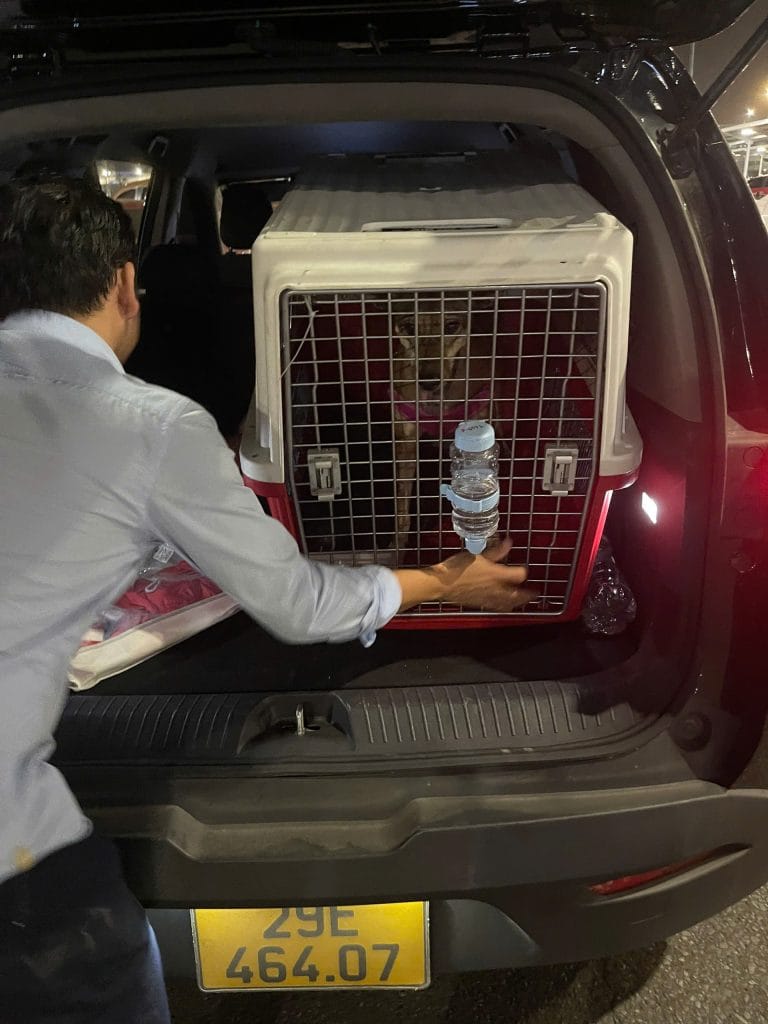
Alongside the paperwork, Qi Xi’s crate had to clear the same IATA CR1 standard every pet on this route is held to:
- Enough room to stand fully upright, turn around, and lie down flat
- A rigid shell — hard plastic, wood, or metal — that holds up under handling
- Ventilation on multiple sides for consistent airflow
- Securely fitted food and water dishes
See the Indonesia pet transport guide for how the crate requirement fits with the rest of Qi Xi’s paperwork.
A note from the field: genuinely IATA-compliant crates are still hard to source reliably in Vietnam — confirm a vendor can show real compliance, not just a crate that looks the part, before buying. See the full IATA-compliant crate guide for the complete sizing standard.
Part 4: The Document Timeline
- 11 November 2025 — Rabies vaccination administered.
- 13 January 2026 — Blood sample drawn for the titer test, in Ho Chi Minh City — 63 days after the vaccine, comfortably past the required 30-day minimum.
- 2 February 2026 — Titer result confirmed: well above the 0.5 IU/mL threshold Indonesia requires.
- 19 May 2026 — Import permit issued by Indonesia’s Directorate General of Livestock and Animal Health Services, through a licensed Indonesia-based agent.
- 14 August 2026 — Export health certificate issued in Ho Chi Minh City, two days before departure — inside the mandatory 5-day window.
- 16 August 2026 — Departure on Vietnam Airlines flight VN631, Ho Chi Minh City to Jakarta, nonstop.
One detail worth flagging for anyone planning around the same permit rule: the import permit is valid for 3 months from issue, and this shipment’s departure landed at 89 days after the permit date — inside the window, but close enough that a short delay on either end could have pushed it past the deadline. See the Indonesia shipping timeline for how to build in more margin than this case had.

Part 5: Arrival and Quarantine
Landing at Soekarno-Hatta puts Qi Xi into Indonesia’s mandatory quarantine hold, run by Barantin at the airport’s Agricultural Quarantine Building. See the Jakarta quarantine guide for the standard 7-day process every pet on this route goes through before release, regardless of how complete the paperwork already is.
Part 6: What This Case Confirms
Two things this shipment settles that owners often ask about: Indonesia does not restrict this route to cargo-only travel, and a titer test run in Vietnam carries the same weight as one run overseas — only the second one costs more and takes longer for no compliance benefit. Both are worth confirming with whoever is handling the shipment before a decision gets locked in months ahead of departure.
Last updated 20 Oct 2026 · First published 17 Aug 2026