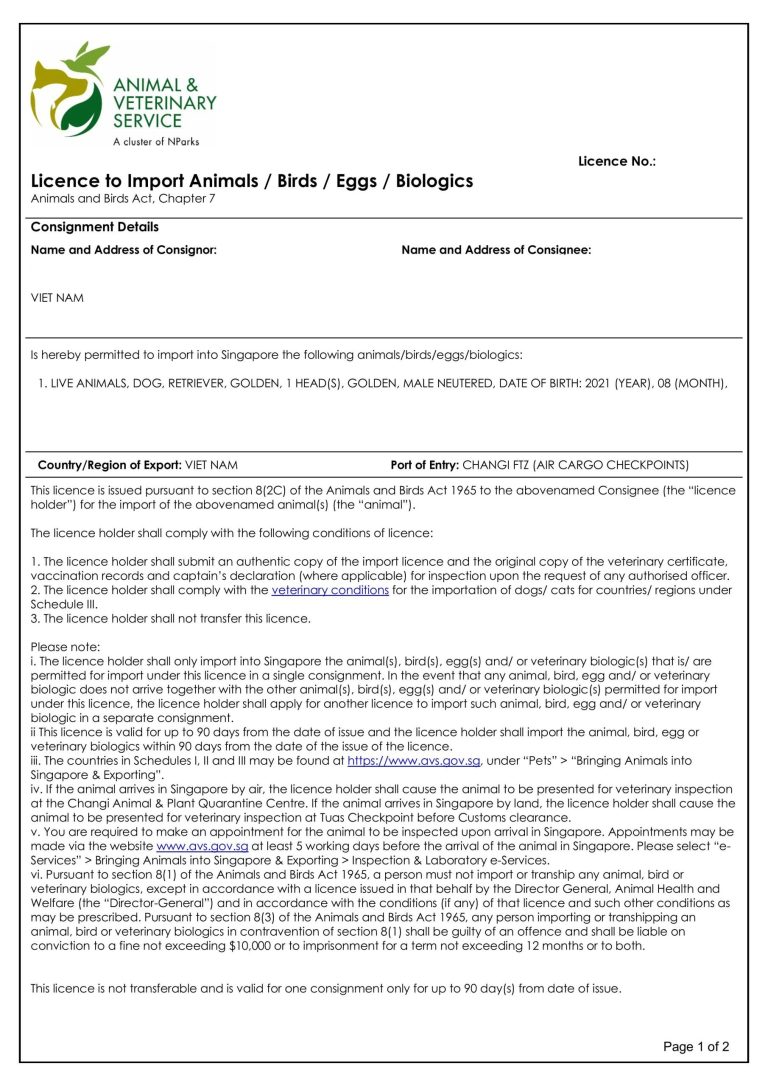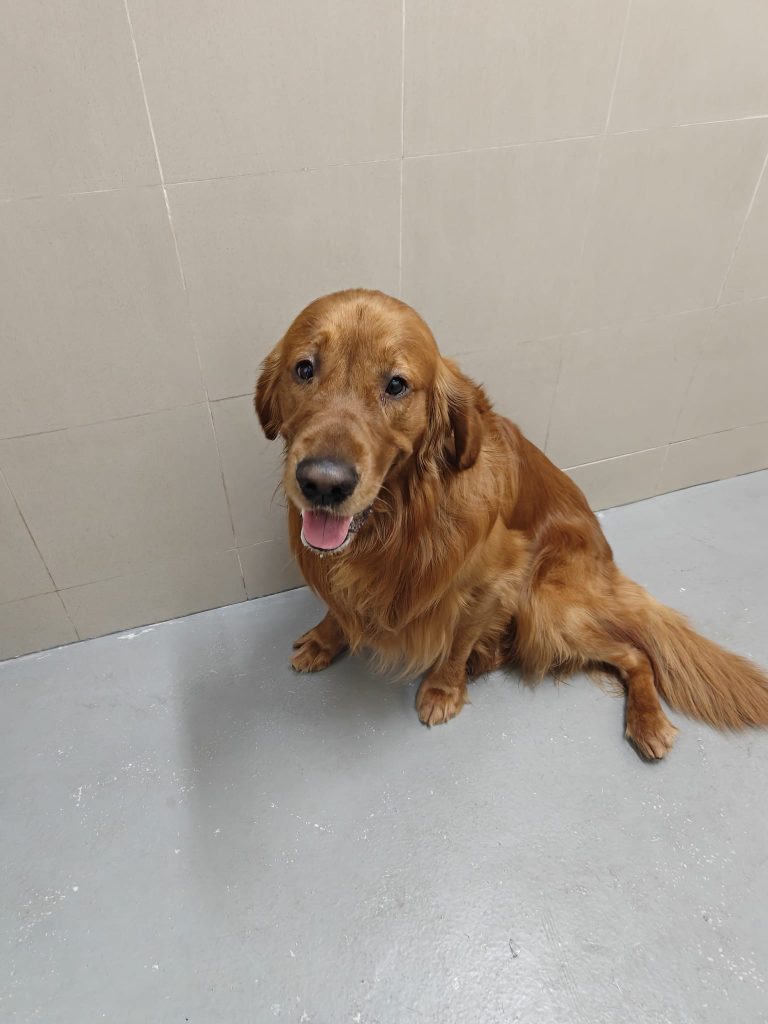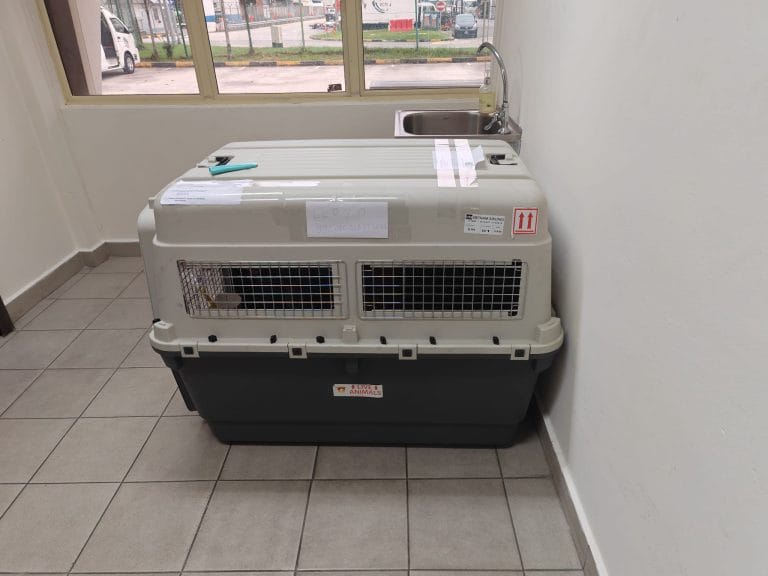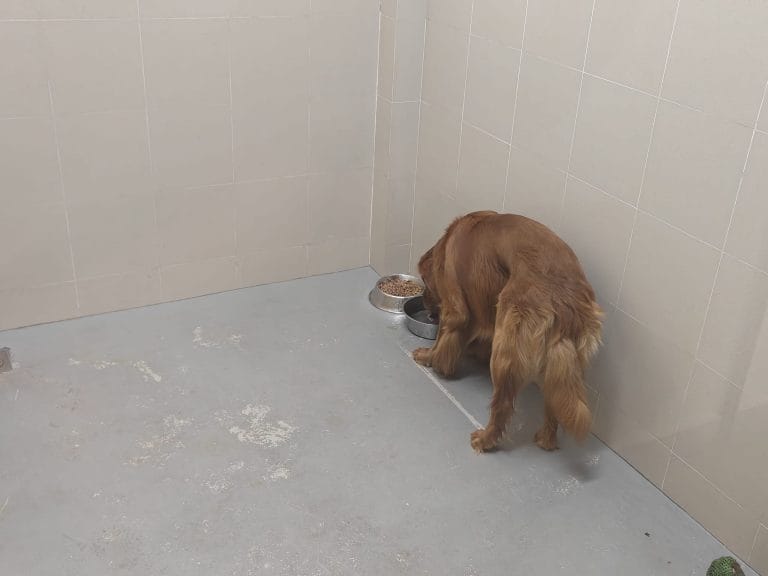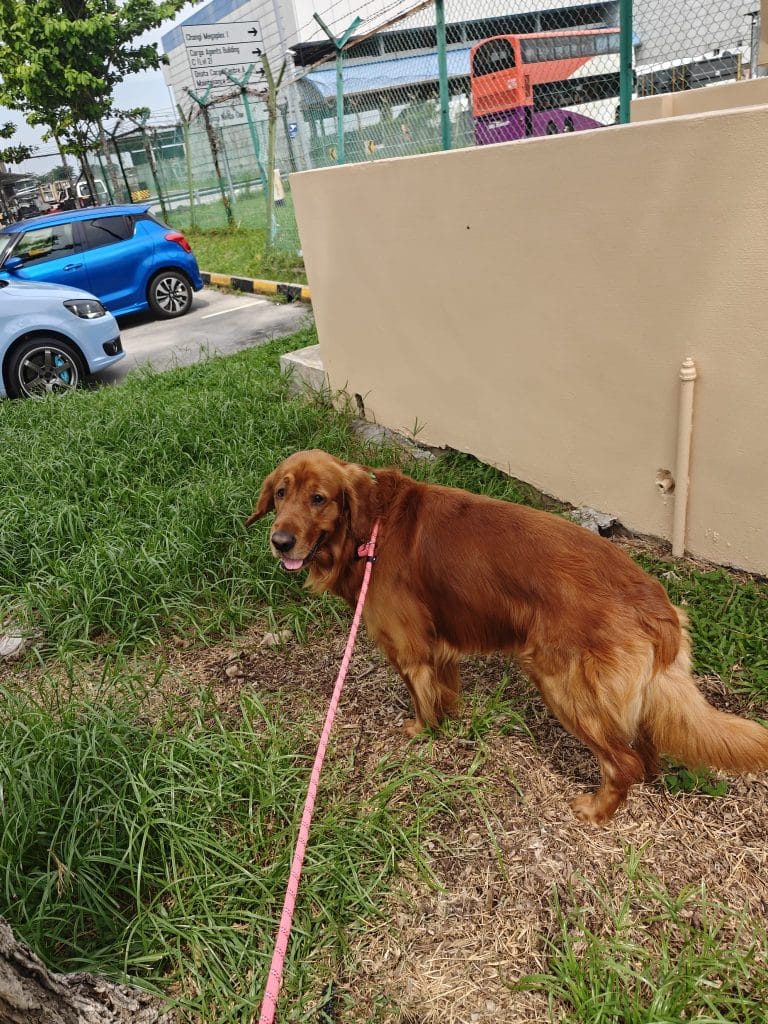
Many pet owners worry that relocating a large, active dog breed like a Golden Retriever to Singapore is impossible due to the country’s stringent biosecurity rules. However, the real-world journey of Lloyd proves otherwise. Lloyd is a male Golden Retriever born on August 7, 2021, weighing 34 kg, who had previously lived in Singapore and was returning to reunite with his family. This case study details the complete relocation roadmap, from veterinary preparation and IATA crate compliance to arrival at the Animal Quarantine Centre (AQC).
Following Lloyd’s journey provides a realistic look at how professional international pet relocation operates. The process requires not only absolute accuracy in veterinary paperwork but also a deep understanding of animal welfare, crate acclimation, and airline cargo safety regulations.
The Initial Challenge: Lloyd and the Route
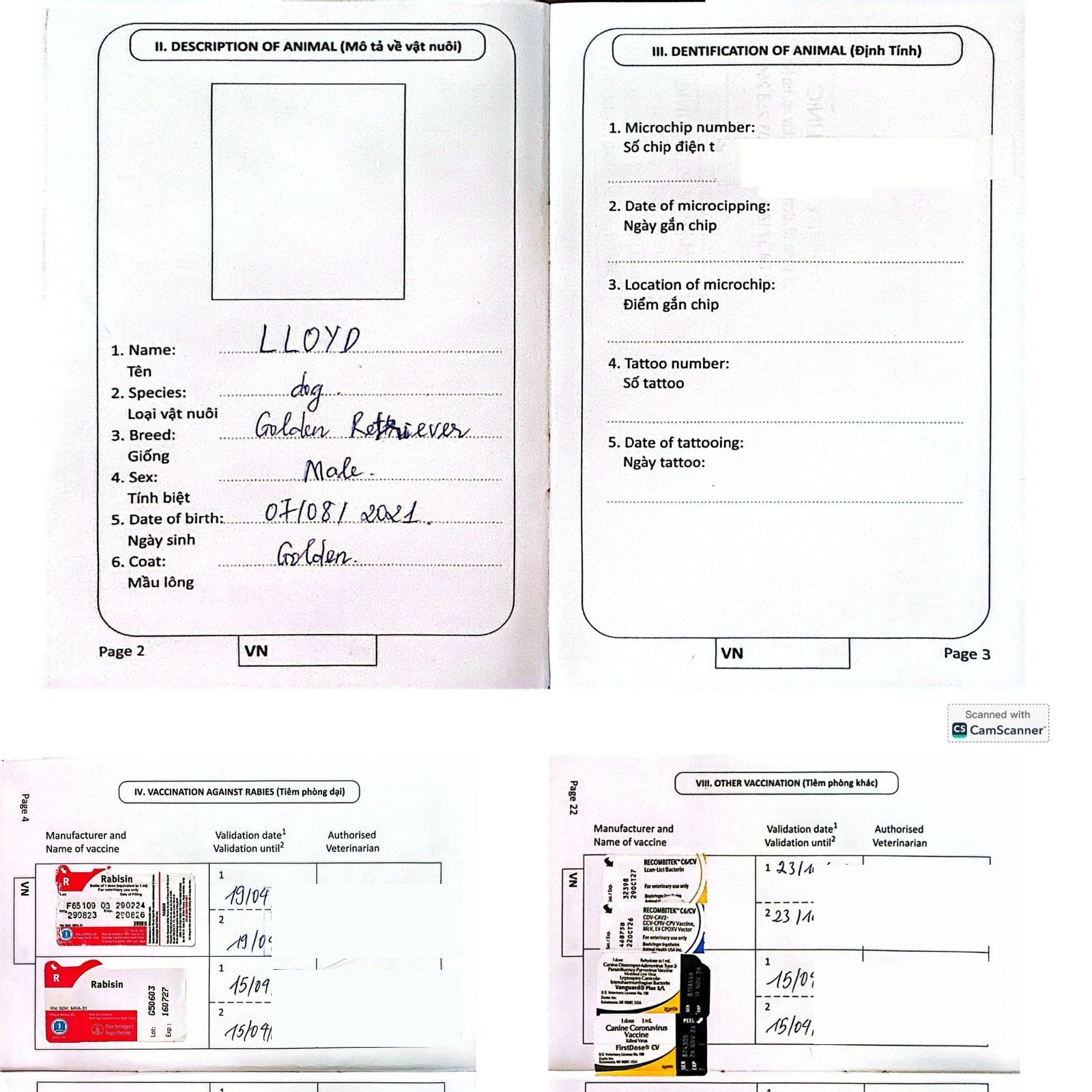
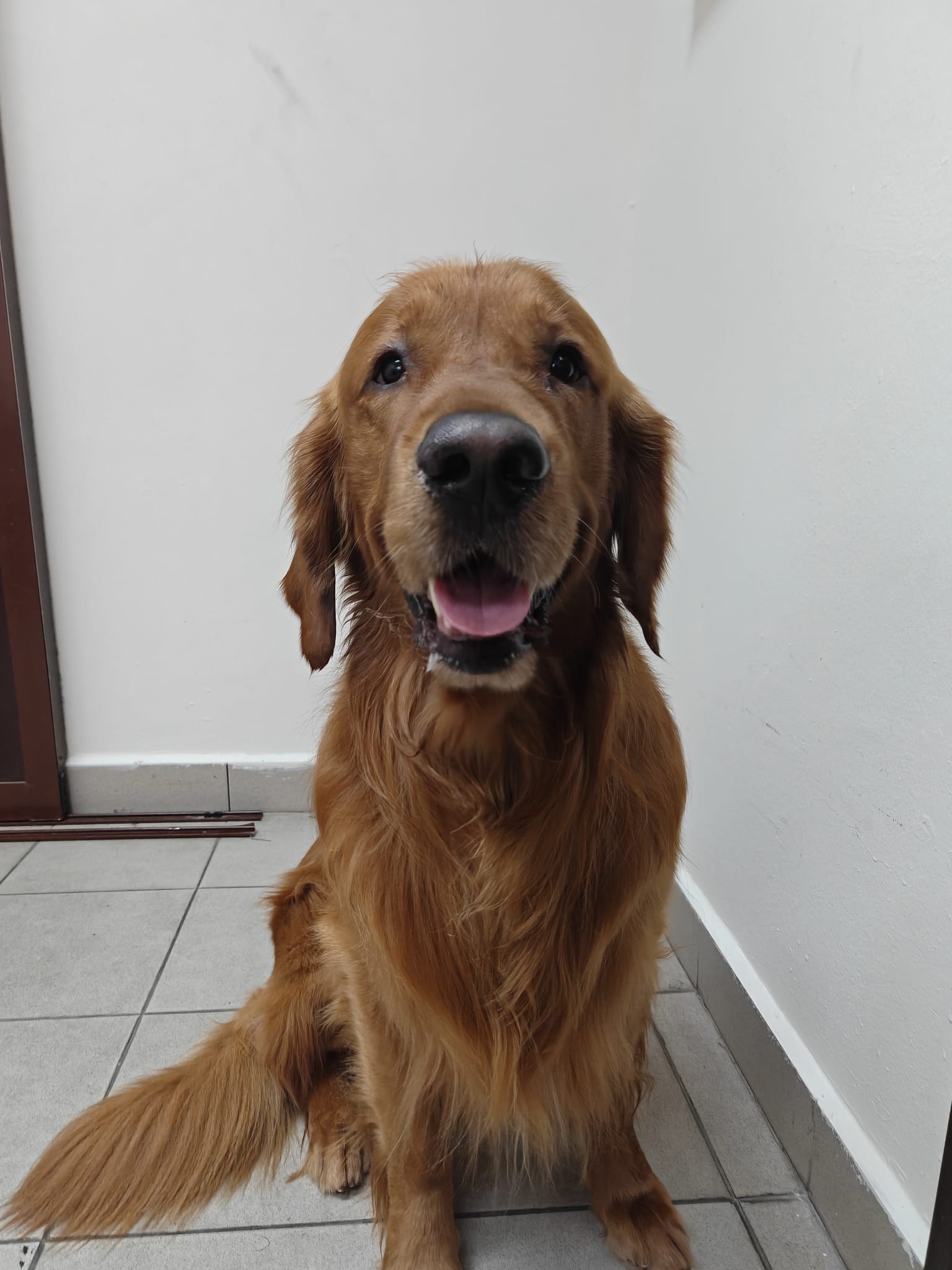
Lloyd is an adult Golden Retriever, healthy and energetic but weighing 34 kg. Fortunately, he already possessed a complete vaccination record and a valid Rabies Neutralising Antibody Titer Test (RNATT) result from his previous stay. This was a major advantage, significantly reducing the standard biological preparation timeline required before departure.
The travel route was established from Hanoi Noi Bai International Airport (HAN) to Singapore Changi Airport (SIN). The primary operational challenge for a large dog like Lloyd was establishing a safe flight protocol that minimized temperature risks during the hot northern Vietnamese summer and ensuring that customs documentation was flawless.
Regulatory Steps: AQC Booking and Import Licensing
Singapore enforces some of the strictest rabies-control regulations globally. Pets arriving from Vietnam must undergo a mandatory quarantine period at a government facility. Upon receiving Lloyd’s details, the Daisy Pet team initiated the end-to-end booking and licensing sequence:
- AQC Quarantine Booking: We submitted the quarantine application through the Quarantine Management System (QMS) to secure a slot at the Animal Quarantine Centre (AQC). Booking early allowed us to secure an air-conditioned room suitable for Lloyd’s size and breed. For a detailed guide, refer to our walkthrough on Booking an AQC Quarantine Slot.
- AVS Import Licence: We obtained the official import authorization from Singapore’s Animal & Veterinary Service (AVS – NParks).
- Parasite Treatments: Lloyd underwent veterinary treatments for internal and external parasites using AVS-approved products, with details fully recorded and stickers endorsed in his health booklet.
IATA Crate Measurement and Airline Cargo Classification
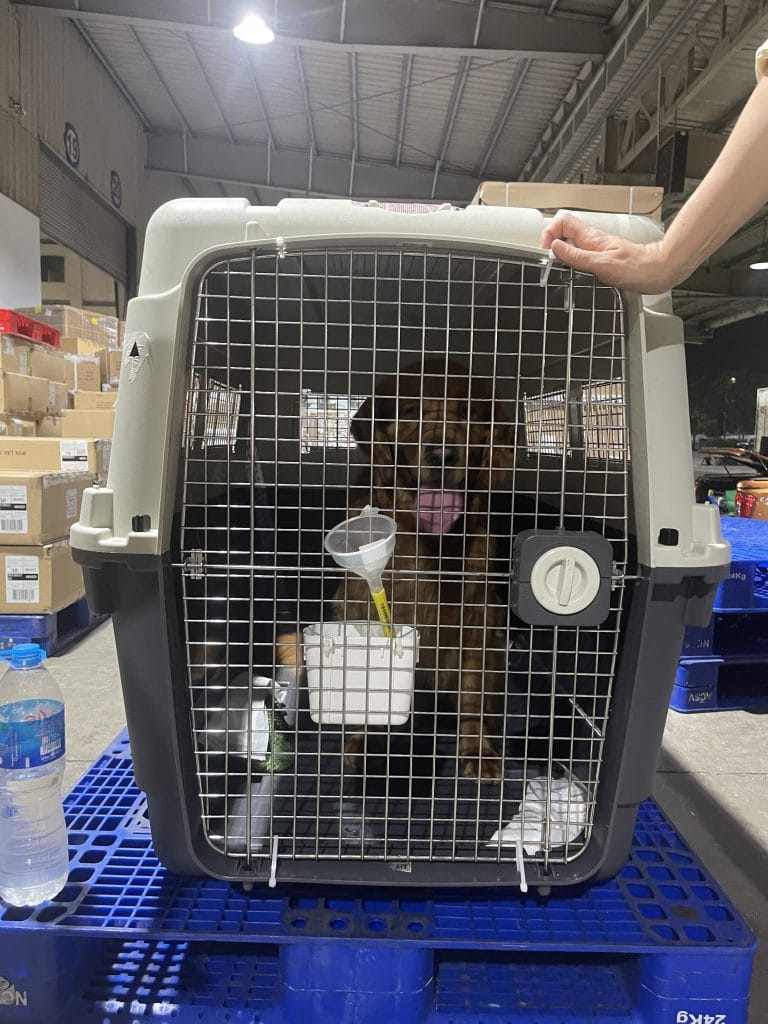
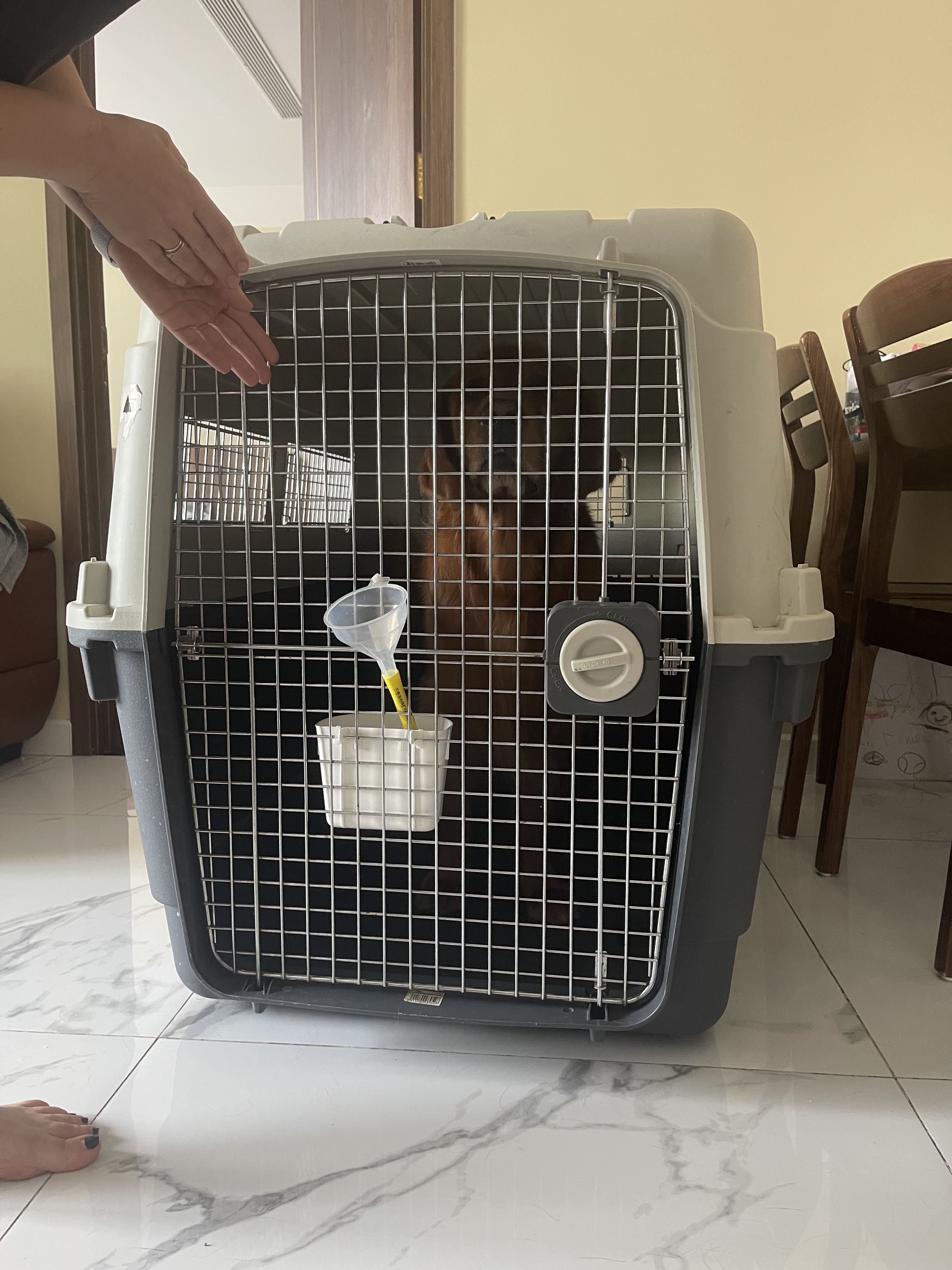
For large dogs, the travel crate is the single most critical factor for safety and comfort during air transit. Lloyd’s family had a crate on hand, so a Daisy Pet technician conducted a home inspection to verify compliance with IATA Crate Requirements.
IATA rules dictate that a crate must be tall enough for the pet to stand fully upright without touching the roof, wide enough to turn around easily, and long enough to lie down naturally. The door must be made of strong welded metal with a secure multi-point locking mechanism, and we installed dual water bowls attached directly to the metal door grid.
Operationally, the weight breakdown was key: Lloyd weighed 34 kg, and the empty travel crate weighed 15 kg, bringing the combined weight to 49 kg. Under international airline rules, pets with a combined weight exceeding 32 kg cannot be checked in at the passenger terminal as baggage (AVIH). Consequently, Lloyd was booked to fly as Manifest Cargo, which involves shipping under a dedicated Air Waybill (AWB).
Flight Selection: Night Routing to Avoid Heat Risks
Vietnam Airlines (VNA) was selected for the HAN–SIN route because it offers a direct flight, avoiding layover stress. However, because the relocation occurred in early June, northern Vietnam was experiencing peak summer temperatures.
To protect Lloyd from the risk of heat stress while cargo containers are queued on the tarmac at Noi Bai, we scheduled a flight departing at 5:00 AM on June 3. Flying at dawn ensured that Lloyd traveled during the coolest hours of the day, protecting his respiratory system before the plane reached cruising altitude.
Pre-Export Veterinary Clearance and Government Endorsement
Five days before the flight, we brought Lloyd to the regional animal health authority in Hanoi for his export clinical inspection. The documentation package prepared for the inspection included:
- The Singapore AVS Import Licence.
- The Air Waybill (AWB) number.
- The original RNATT rabies titer laboratory report.
- The completed AVS Veterinary Certificate for Singapore.
Following a successful clinical check, the Noi Bai Airport Animal Quarantine Station (Regional Animal Health Office No. I) issued the official Animal Health Certificate for Export, Form 13a (Mẫu 13a).
Departure Operations: Noi Bai Cargo Terminal
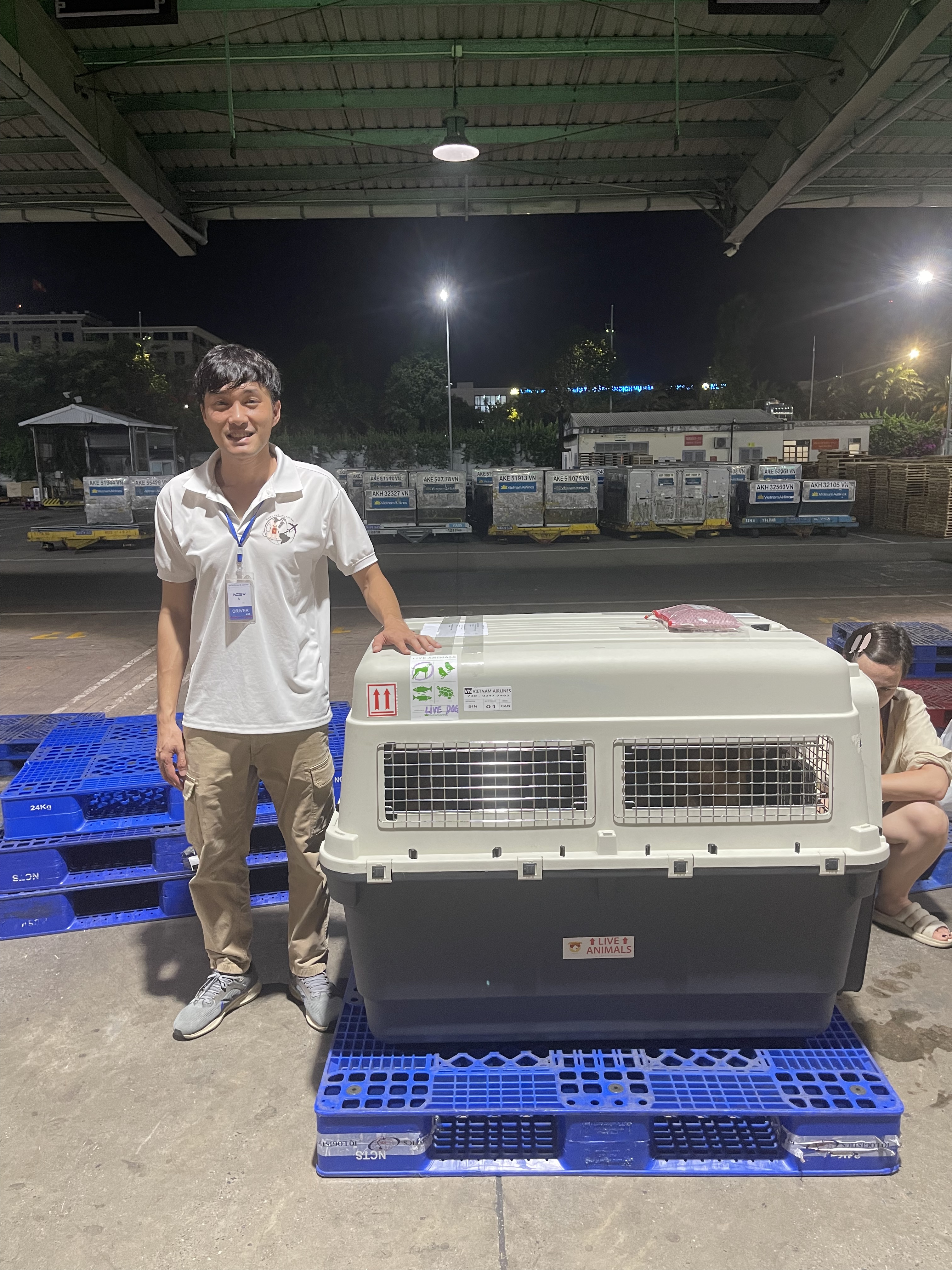
At 1:00 AM on June 3, Daisy Pet staff and the owner arrived at the ACVS cargo warehouse at Noi Bai International Airport. We cleared export customs and brought Lloyd to the live animal check area for a physical inspection of both the dog and the crate.
Lloyd remained calm throughout the check-in process. Once the export documentation was stamped and attached to the crate in a waterproof pouch, Lloyd was transferred to the climate-controlled live animal holding zone prior to boarding.
Arrival at Changi and Check-In to AQC Quarantine
At 10:00 AM Singapore time on June 3, the flight landed safely at Changi Airport. Daisy Pet’s AVS-recognised partner agent in Singapore was on-site at the CAPQ airport quarantine station to receive the original files and clear the import customs registry.
Following a clinical check by the AVS veterinarian at CAPQ, Lloyd was transferred to a specialized transport vehicle and moved to the Animal Quarantine Centre (AQC) at 2 Jalan Lekar, Singapore 698919. Upon arrival, staff walked him, checked his microchip, provided food and water, and settled him into his quarantine room.
This marked the beginning of Lloyd’s mandatory 30-day quarantine at AQC. You can read more about the boarding environment in our guide on the Singapore AQC Quarantine Experience.
Visiting Lloyd at the AQC Facility
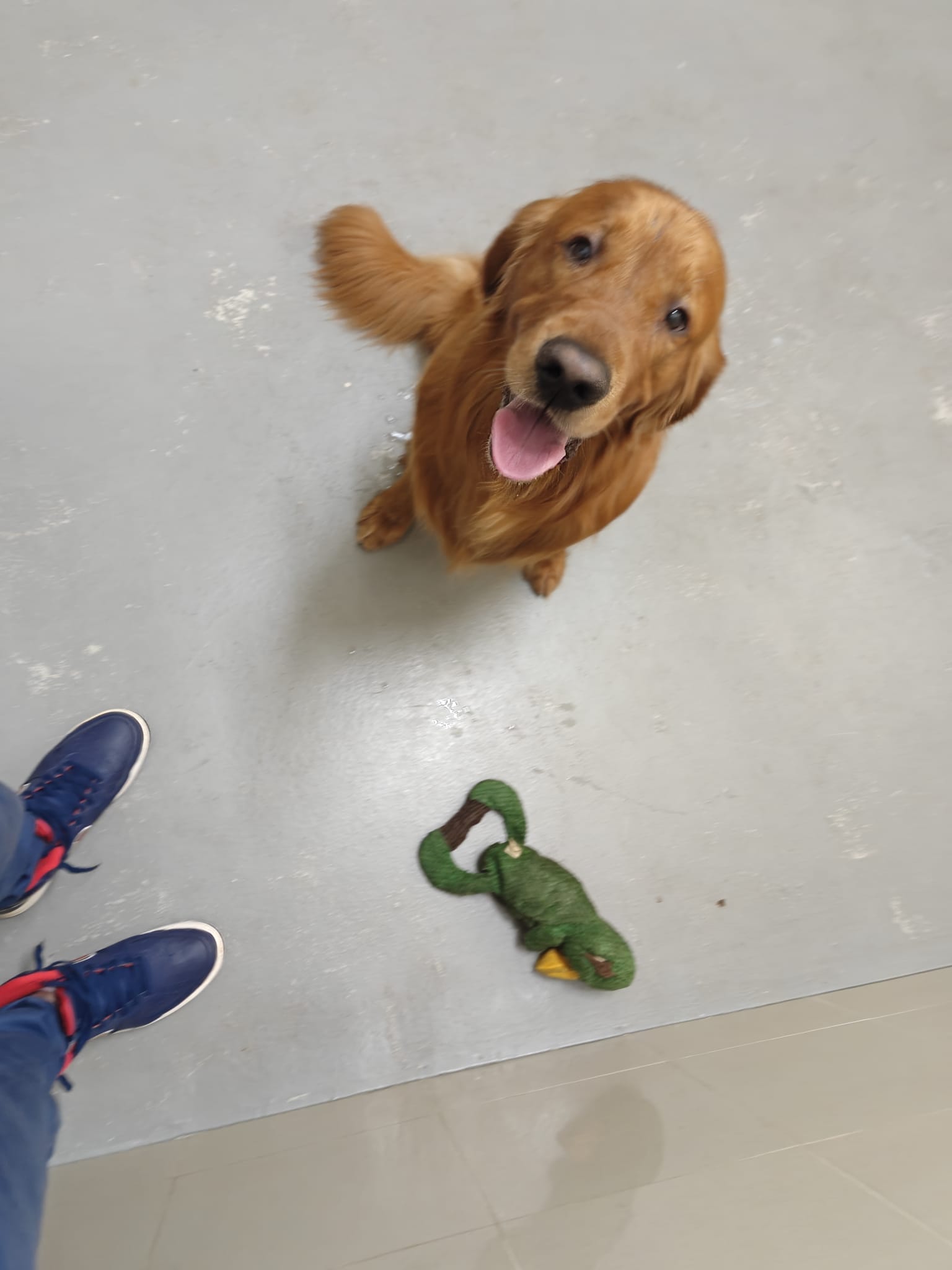
Unlike quarantine programs in some countries, Singapore allows owners to visit their pets during the 30-day stay. Visiting hours are Tuesday and Thursday (15:00–17:00) and Saturday (14:00–17:00), excluding public holidays.
For Lloyd’s family and other owners visiting the 2 Jalan Lekar trạm, here are key operational tips:
- Required Items: You must bring your physical ID (IC/Passport), an EZ-Link or NETS transit card (to register at the security gate), and a credit card to purchase the temporary key to the pet’s kennel room.
- First-Time Registration: Arrive 15 minutes before the visiting window starts on your first visit to complete the briefing and registration.
- Parking Constraints: If you are driving, arrive 30 minutes early. Parking spaces at the Jalan Lekar facility are limited and fill up quickly.
After completing the 30-day quarantine, owners collect their pets. To ensure your dog is legally registered to live at your new address, you must complete the PALS Pet Licence Registration prior to the release date.
Key Takeaways for Large Dog Relocation
Lloyd’s return to Singapore was successful due to his family’s early preparation, crate conditioning, and a flight schedule optimized to bypass high runway temperatures. Rigorous documentation and coordination between the export and import agents are the pillars of a safe, stress-free international pet relocation.
Last updated 18 Oct 2026 · First published 3 Jun 2026