Ask five pet relocation sources what it costs to move a dog to South Africa and you will get five different numbers, because most of them are quoting the easy part — the flight — and skipping the parts that actually drive the total up: a permit system split across two government offices, a blood test that may need to travel to a lab overseas, and a 14-day quarantine stay with no published daily rate. This guide breaks the real cost structure into its actual components, for both dogs and cats moving on our South Africa pet transport route, so you can budget for what the process involves rather than what a single line item suggests.
Preparatory Costs: Vet Work, Microchip & Blood Tests
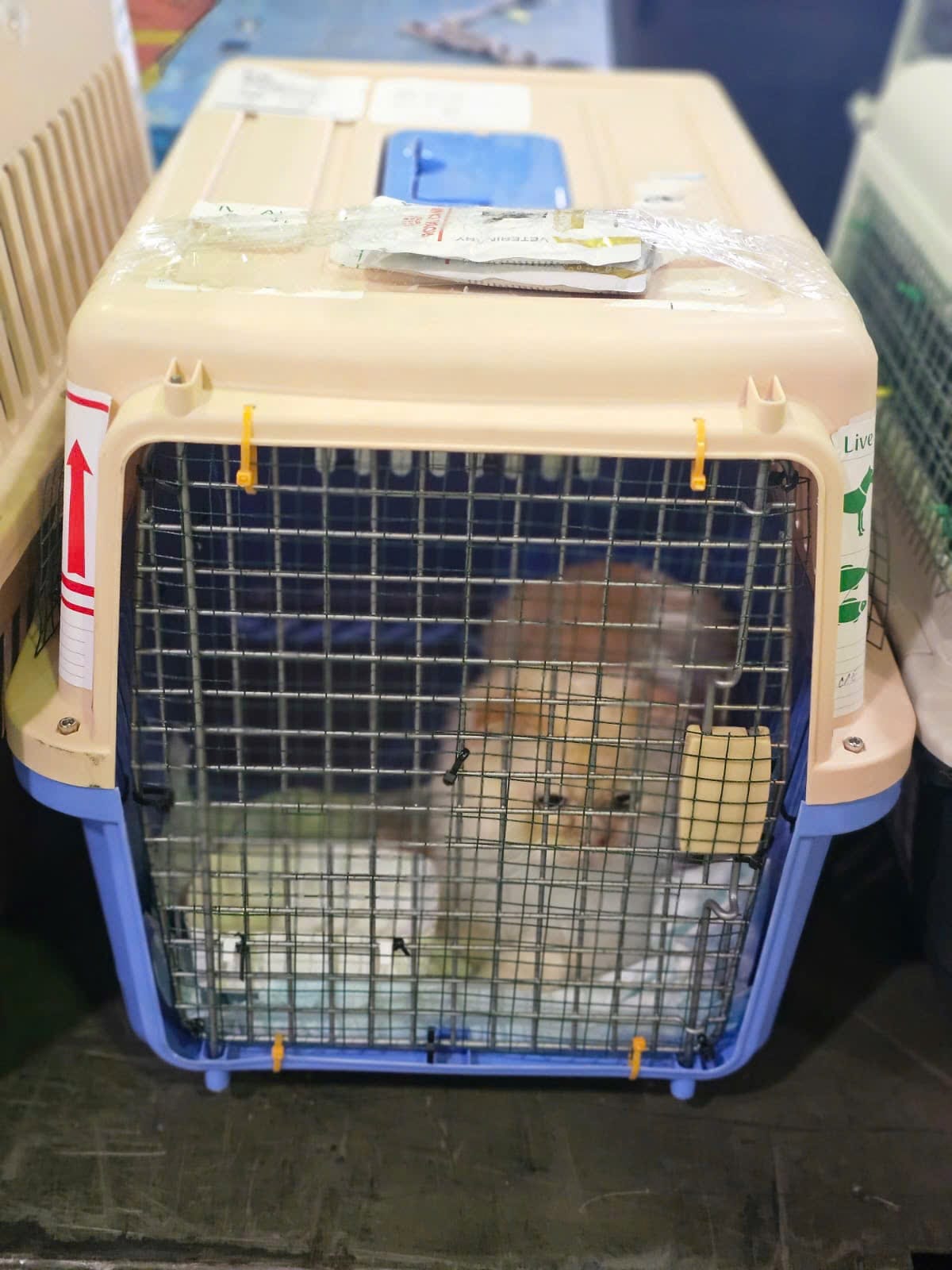
This stage looks similar to most other destinations at first — microchip, rabies vaccination, a veterinary exam — until you reach the blood panel. Dogs need five disease tests within 30 days of arrival; cats need none of them. Four of the five tests can be billed like a normal lab panel at an officially approved lab in the country of export — whether that means a local lab in Vietnam is confirmed case by case. The fifth, Trypanosoma evansi, has to be run at one of only two labs in the world formally accredited for it, and international sample shipping and lab fees sit on top of that. We break down exactly why in our dog blood test and quarantine guide — read that before your vet draws a single sample, since the wrong lab means paying for the test twice.
Government Permit Fees
South Africa’s fees are modest on paper but apply per document, and dogs pay for two documents where cats pay for one:
- AIA Import/Export Permit (dogs only): R460, covering both exit and re-entry.
- Veterinary Import Permit (dogs and cats): R140.
Both fees are revised annually from 1 April, so confirm the current figure with DALRRD when you submit rather than budgeting from an old quote.
Quarantine Costs
This is the line item most owners underestimate, because DALRRD does not publish a fixed daily rate for either quarantine station. What is documented is the payment method: both Kempton Park and Milnerton stopped accepting cash years ago, and every quarantine fee is settled by direct bank transfer to the station’s own account, confirmed when you call to book. In Daisy’s 2026 quote, the booking plus 14 days of quarantine came to about $1,700 per dog. That is a quoted figure, not an official rate — the station’s charge is confirmed with the Quarantine Officer at booking, and it does not appear anywhere in DALRRD’s published guidance. Cats are not routinely quarantined at all, which removes this cost entirely for a cat case.
Crate and Cargo Costs
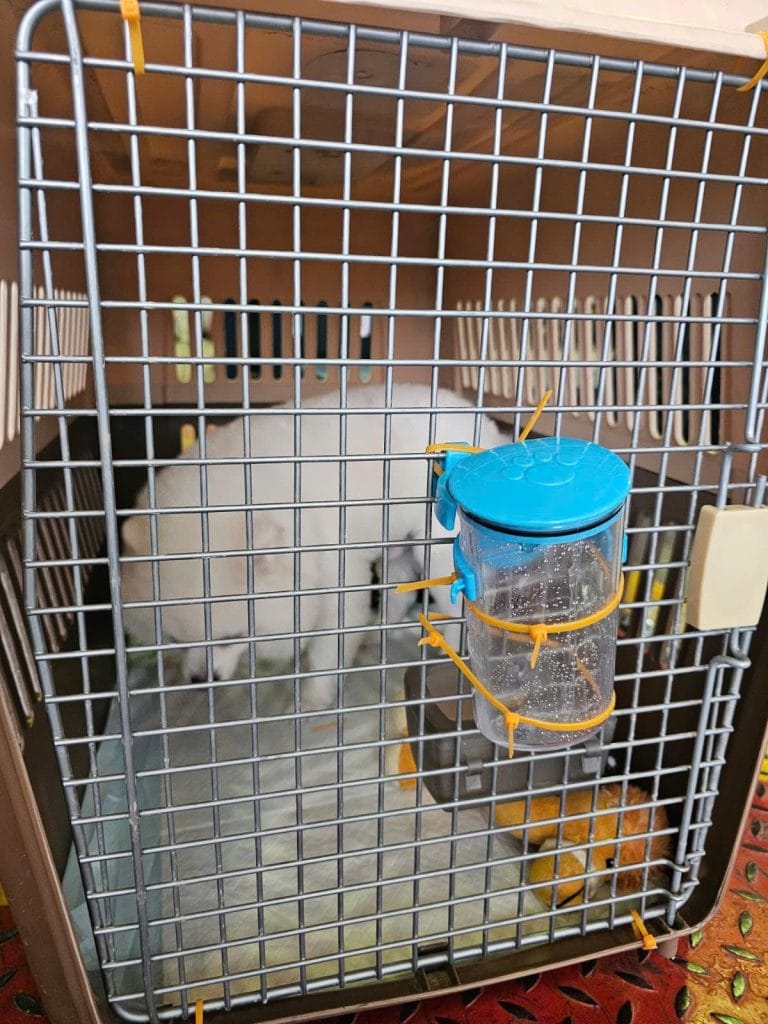
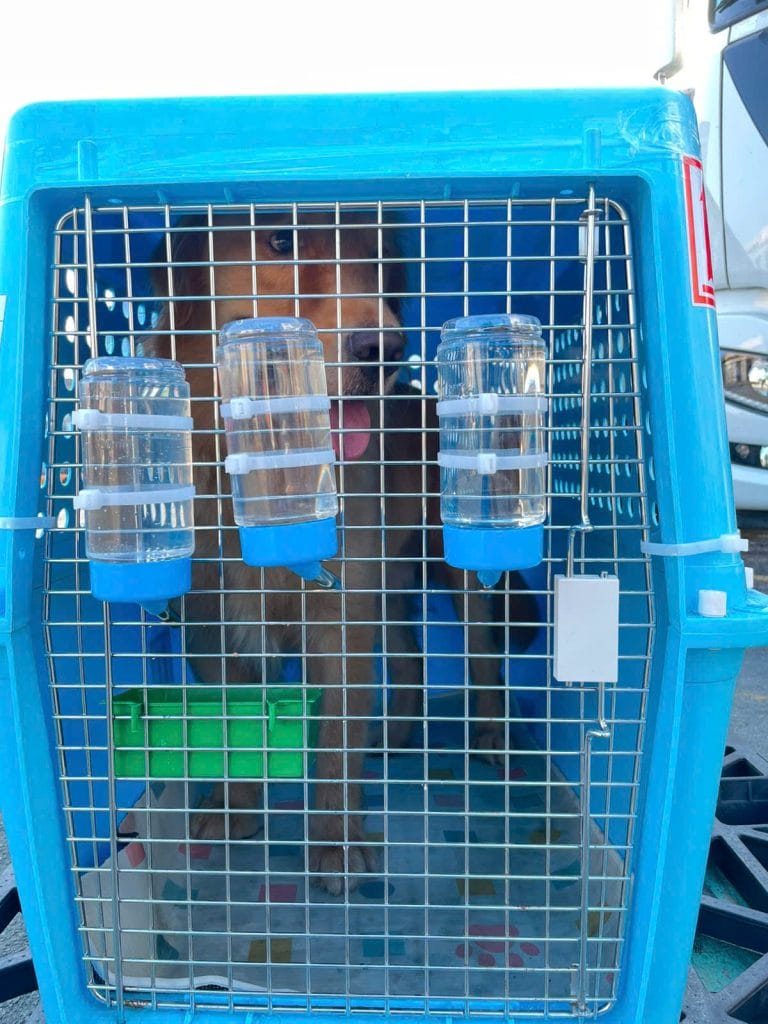
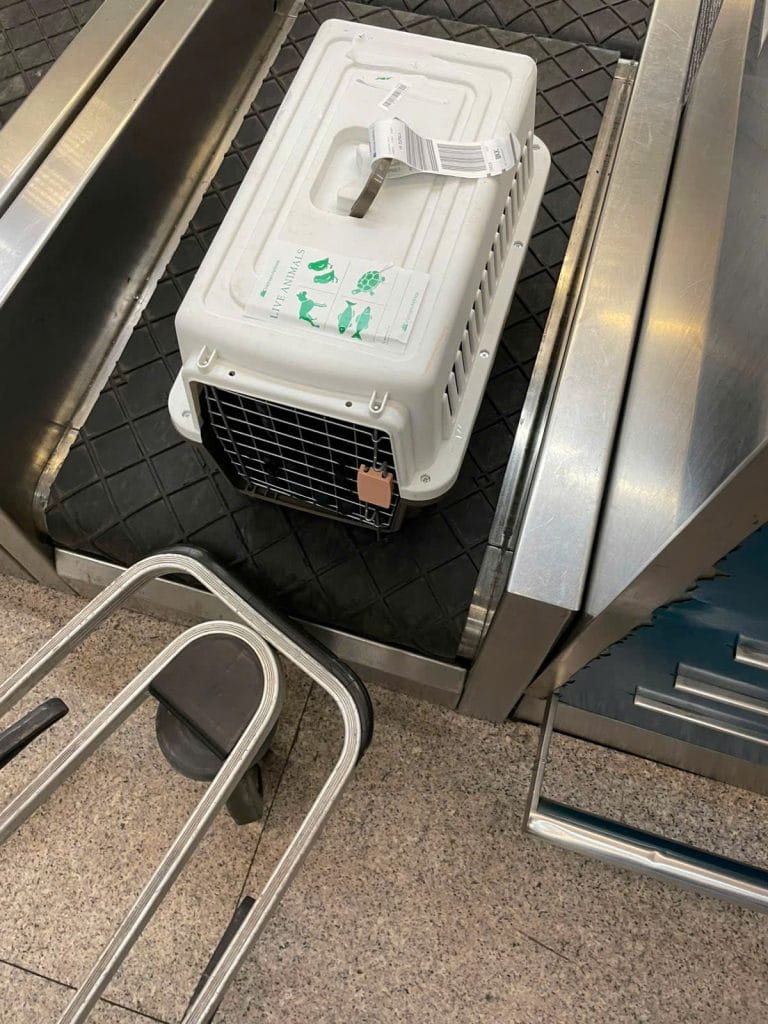
Every pet travels as manifest cargo — South Africa does not permit checked-baggage or in-cabin travel for any pet, regardless of size. That means an IATA-compliant travel crate sized to your pet, plus an airline cargo fee calculated on volumetric weight rather than actual weight. Cargo pricing depends heavily on which carrier and connecting hub you use, since there is no direct flight between Vietnam and South Africa. In Daisy’s 2026 quote for two dogs, freight came to $7,500 for a 90 × 61 × 44 cm crate and $9,500 for a 123 × 83 × 55 cm crate, plus about $520 per crate for the air waybill, export customs declaration and handling. Our South Africa airlines guide covers the routing options and what affects cargo pricing on each one.
A Worked Example: Two Scenarios
Because South Africa’s costs vary so much by permit path, species, and lab logistics, two scenarios illustrate the gap better than an abstract range:
Scenario 1 — a sterilized companion cat: no AIA permit, no blood panel and no routine quarantine, which removes the two largest non-freight lines in the dog quote below — about $2,500 for the blood panel and about $1,700 for quarantine. Freight and arrival-side clearance still apply, and Daisy quotes cat cases individually.
Scenario 2 — a dog, from Daisy’s 2026 quote: Vietnam-side documents and service (~$950), the mandatory five-disease blood test package including the international leg for the Trypanosoma evansi sample (~$2,500), import and transit permits, including the government fees above (~$900), quarantine booking and 14 days in quarantine (~$1,700), freight (~$7,500–9,500 depending on crate size), air waybill, export customs and handling (~$520), and the South African agent, clearance and handling (~$1,700). The total came to about $15,800–$17,800: $15,800 for a dog in a 90 × 61 × 44 cm crate and about $17,800 in a 123 × 83 × 55 cm crate, crate not included, before any delay caused by a non-compliant test result.
Cargo pricing changes with the crate, the carrier and the travel date, so confirm current fees for your specific pet before treating either figure as final.
Why the Dog-Cat Cost Gap Is So Wide
Every added cost in Scenario 2 — the AIA permit, the international lab leg, the 14-day quarantine — traces back to requirements that simply don’t exist for cats under South Africa’s current rules. It is not that dogs are treated more cautiously in general; it is that the AIA framework and the five-disease panel are both dog-specific by design. The full reasoning behind that split is in our dog vs cat import comparison.
How Delays Turn Into Extra Cost
Almost every added expense in a South Africa case comes from timing, not from the base fees. A quarantine booking made late, a blood sample sent to the wrong lab, or a flight that lands on the wrong day of the week can each add days of boarding fees or force a test to be repeated. Our step-by-step timeline lays out the sequence that keeps a case on the original budget, and answers the cost questions that come up most often once owners see the full picture.
Last updated 15 Oct 2026
Compiled by our specialists from the regulations in force on the date above, for reference only. Rules may change after this date. Please verify with the competent authorities or contact us for the most accurate information.